
Precision-Engineered Subsea Pipeline Repair Clamps for Harsh Offshore Environments
Subsea pipelines are critical for the transportation of liquids and gases, their integrity is vital for security of supply and environmental protection.
When integrity is compromised - whether through corrosion, mechanical damage, a weld failure, or a flange defect - repair has to happen in one of the most demanding environments on earth, often without interrupting production.
STATS subsea pipeline repair clamps are designed for exactly that challenge. Engineered to restore pressure containment and structural integrity in conditions that defeat lesser solutions, they are available for diver installation or ROV deployment across a broad range of pipeline sizes, pressures, and materials.
Jump To Section:
Solving Complex Subsea Integrity Challenges
STATS Group brings decades of subsea pipeline experience to every repair clamp project. Our designs are engineered to client specifications and pipeline conditions - not manufactured to a generic standard and fitted wherever they will go.
From pressure containment on a corroded line to full structural repair of a pipeline at risk of separation, our range covers the complete spectrum of subsea repair requirements. All clamps are supplied with STATS-trained technicians during installation, ensuring safe, correct deployment whether the work is carried out by divers or remotely operated vehicles.
Our standard subsea repair clamp range covers pipeline sizes from 3" to 56" and design pressures up to 345 bar / 5,000 PSI.
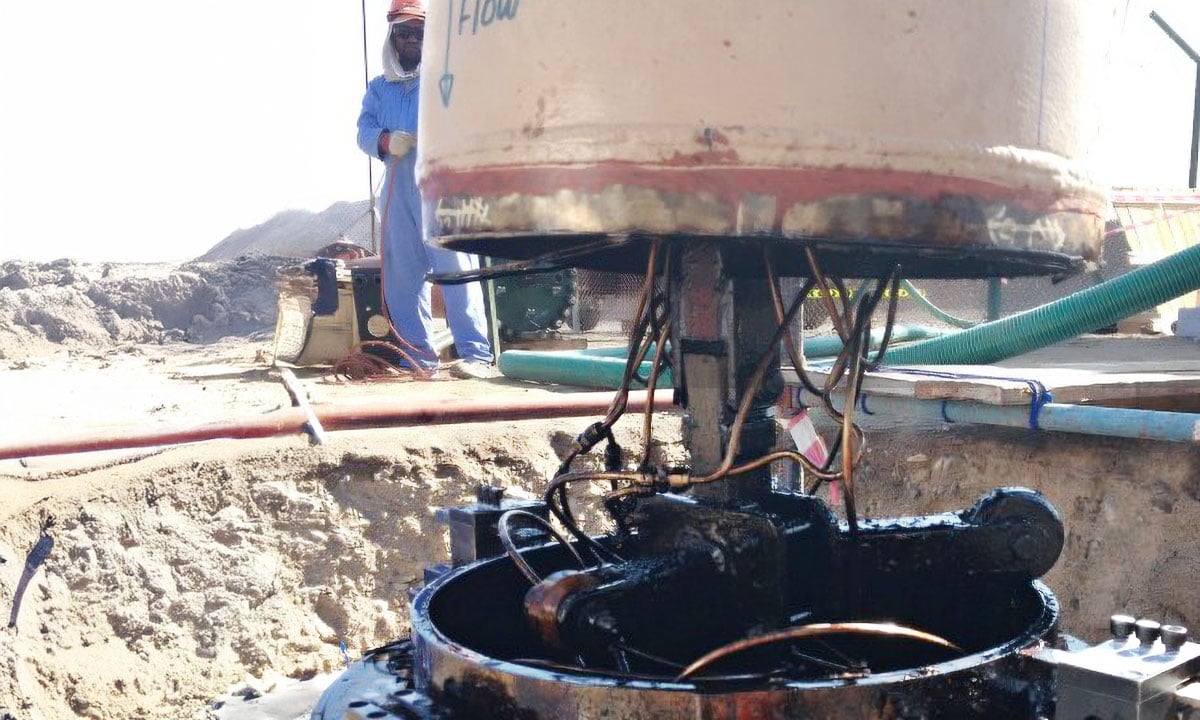
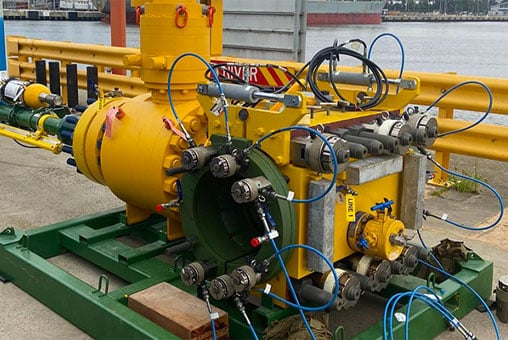
Case Study - Subsea Mechanical Clamp and Hot Tap Tie-In
Custom-designed 18"x12" subsea mechanical clamp and hot tap completed on a live 18" gas pipeline at 72.5 barg in the Bass Strait, Australia, enabling a safe subsea tie-in.
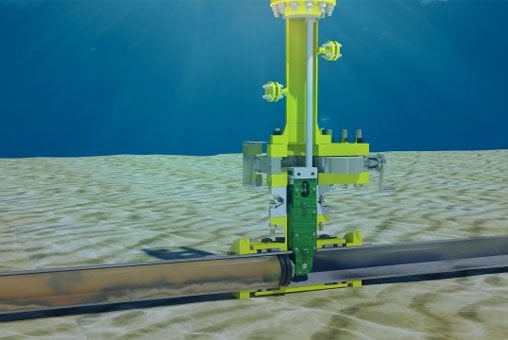
Case Study - 8" Subsea Pipeline Isolation & Repair, Gulf of Thailand
Anchor-dragged gas condensate pipeline repair via permanent subsea bypass at 60m depth. We isolated the damaged section without shutting down production or depressurising the line.
Subsea Pipeline Repair
Subsea Structural Repair Clamps
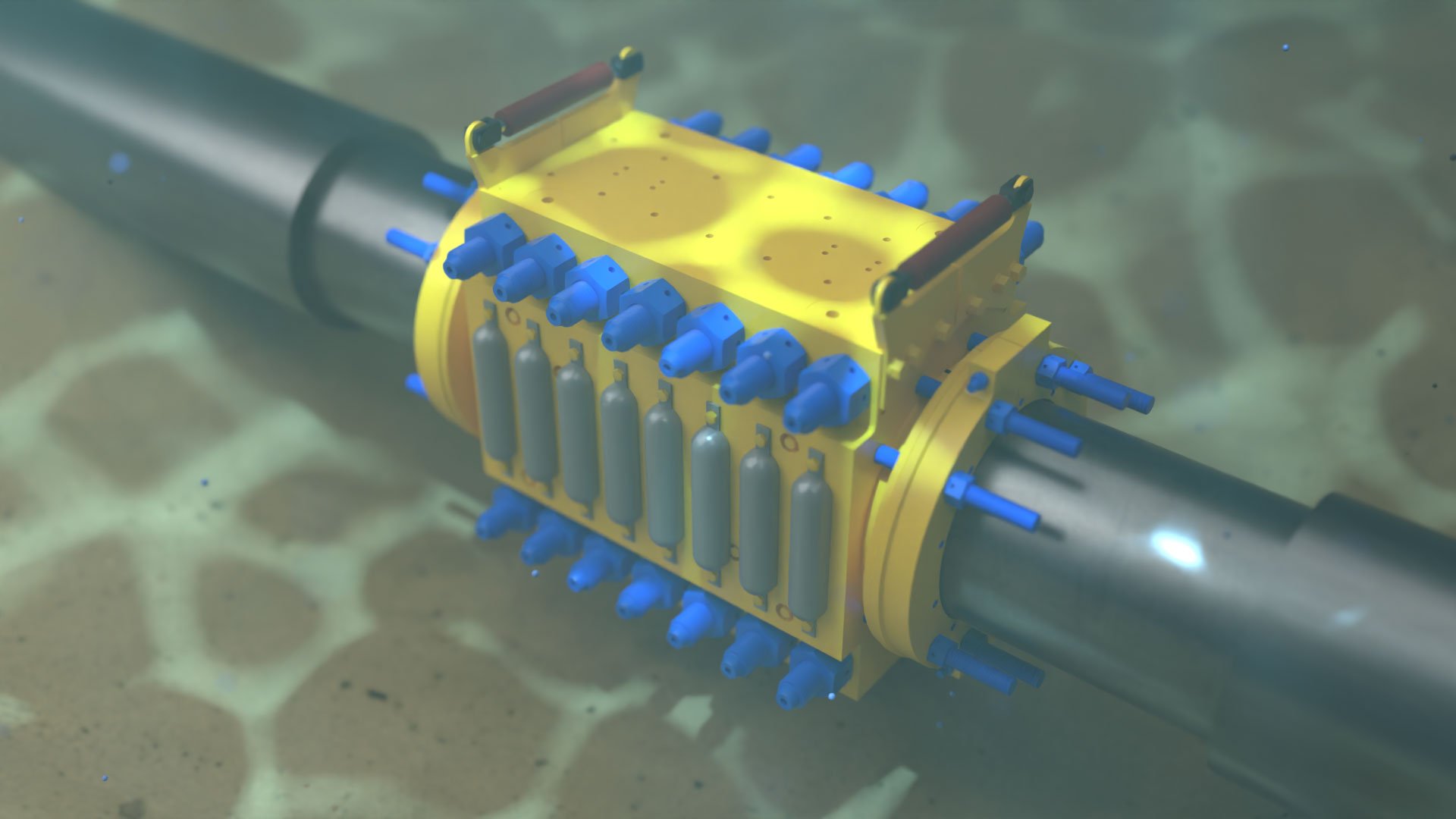
Where the structural integrity of a pipeline is compromised - or where there is a risk of pipe separation - a pressure containment clamp alone is not sufficient. STATS subsea structural repair clamps provide both pressure containment and full axial restraint, designed to withstand complete pipeline separation loads. Fitted with taper locks, these clamps transfer the full axial load of the pipe to the clamp body. Where grout-filled, they also provide radial support.
For 8" diameter and above, the lock cage design is our standard offering - a configuration that positions the structural locks outside the pressure boundary, delivering enhanced performance and lower overall weight.
Smaller diameters use our proven traditional design, which carries the same track record of successful subsea deployments.
Subsea Structural Repair Clamps: What You Need to Know
- Mechanism: Taper locks grip the pipe on either side of the defect, transferring the full axial pipeline load to the clamp body and enabling the clamp to withstand full pipeline separation loads. Grout injection provides additional radial support where required.
- Lock Cage Design: Standard for all clamps 8" and above. The structural locks are positioned outside the pressure boundary, reducing the load on the clamp housing and allowing seals to be set and pressure-tested independently before the locks are engaged. This significantly reduces risk during installation.
- Size and Pressure: 8"–56" (lock cage design); 3"–8" (traditional design). Design pressure up to 345 bar / 5,000 PSI as standard.
- Materials: Compatible with carbon steel, stainless steel, and duplex pipelines. Suitable for use in sour (H₂S) service environments - the lock cage design keeps hardened lock components outside the pipeline media, maintaining NACE compliance.
- Construction: Available in forged or fabricated configurations, according to client specification, lead time, and application requirements.
- Installation: Designed for diver installation supported by STATS-trained technicians. ROV-deployable configurations also available - see ROV Installed Repair Clamps below.
Subsea Repair Clamp
Subsea Pipeline Repair
Pressure Containment Clamps
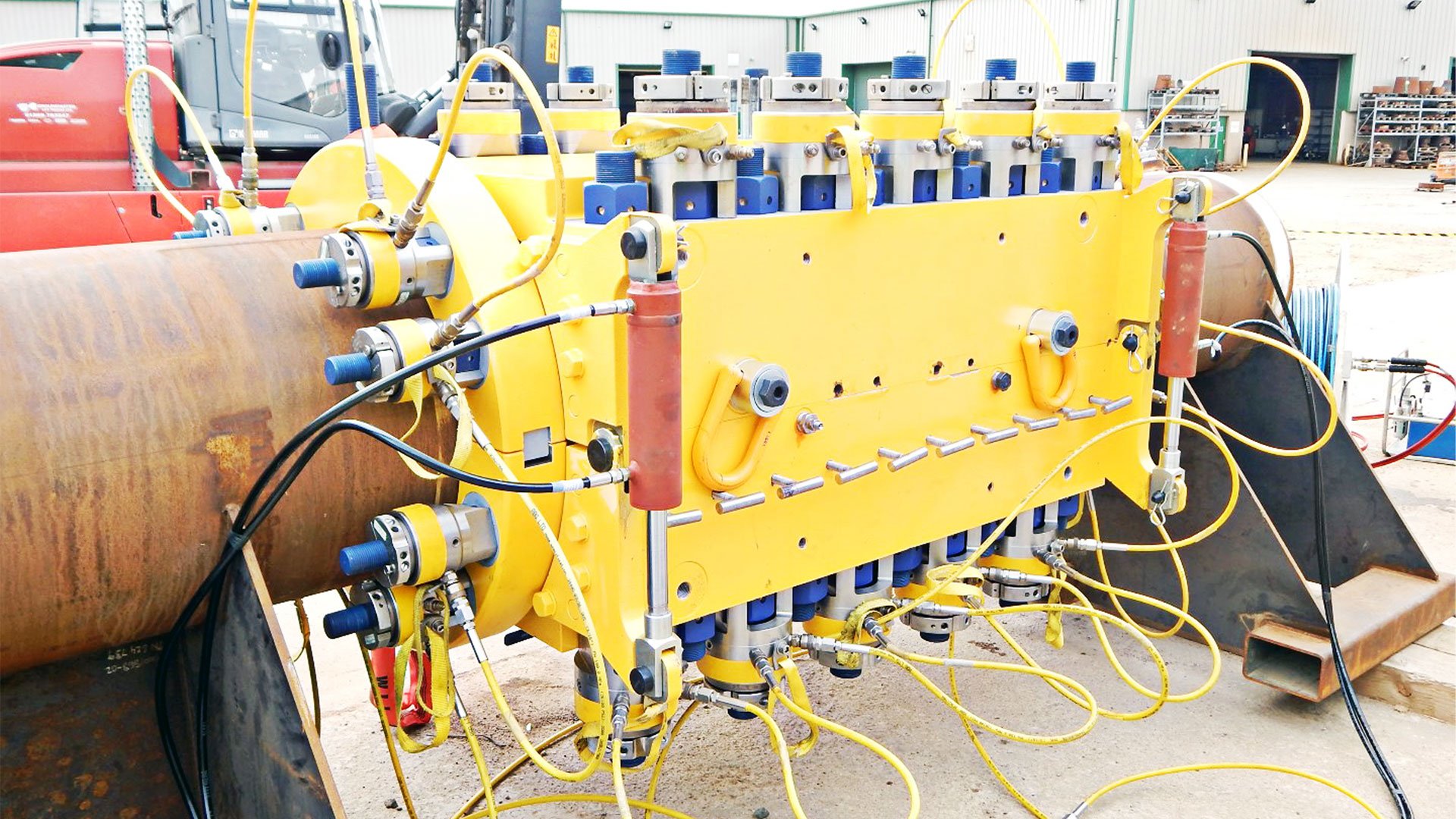
Where the priority is to restore pressure integrity to a damaged or leaking pipeline - and where full structural restraint is not required - STATS subsea pressure containment clamps provide a robust and reliable solution. The defect is fully encapsulated within the clamp body, with mechanical seals engaging against the sound parent pipe on either side.
Our designs incorporate high-quality elastomeric seals that are highly compliant to poor pipe conditions, including ovality and surface corrosion, reducing the preparation required prior to installation.
Pressure Containment Clamps: What You Need to Know
- Mechanism: The clamp encapsulates the pipeline defect, with compression seals engaging against the sound pipe wall on either side. Available with single or dual seals, with body cavity or annulus test capabilities.
- Seal Verification: Dual-seal designs allow full pressure testing of the primary seal before the installation is complete, providing confirmation of integrity before finalising the repair.
- Pipe Condition: Elastomeric seals are designed to accommodate pipe ovality and variable surface conditions, reducing the extent of pipe preparation required - a significant advantage in the subsea environment where preparation time is costly.
- STATS' Advantage: Where clients require specific materials, non-standard coatings, or precise specifications, STATS engineers each clamp to meet those requirements - not a generic catalogue product fitted to a non-standard pipeline.
Pressure Containment Clamp
Subsea Pipeline Repair
Flange Repair Clamps
Subsea flange connections present a particular repair challenge: the clamp must span the entire flange assembly, fitting over a significantly larger external diameter than the host pipeline. STATS subsea flange repair clamps are custom-engineered for each application, encapsulating the full flange-to-flange connection and restoring pressure containment across the joint.
These are large, purpose-built assemblies. Each flange repair clamp is designed around the client's specific flange geometry, pipeline conditions, and operational requirements.
Flange Repair Clamps: What You Need to Know
- Application: For leaking or compromised subsea flange connections where replacement is not possible or practical. The clamp spans the entire flange assembly, encapsulating both faces and restoring a pressure-containing envelope around the joint.
- Custom Engineered: Each flange repair clamp is designed to the specific geometry of the client's flange assembly. Standard sizing does not apply - these clamps are engineered to order.
- Scale: Flange repair clamps are typically significantly larger in external diameter than the pipeline they serve. STATS has successfully designed and manufactured large-bore subsea flange repair clamps for offshore operators.
- Installation: Diver-installed with STATS technicians in attendance. Hydraulic testing of seals is carried out prior to sign-off.
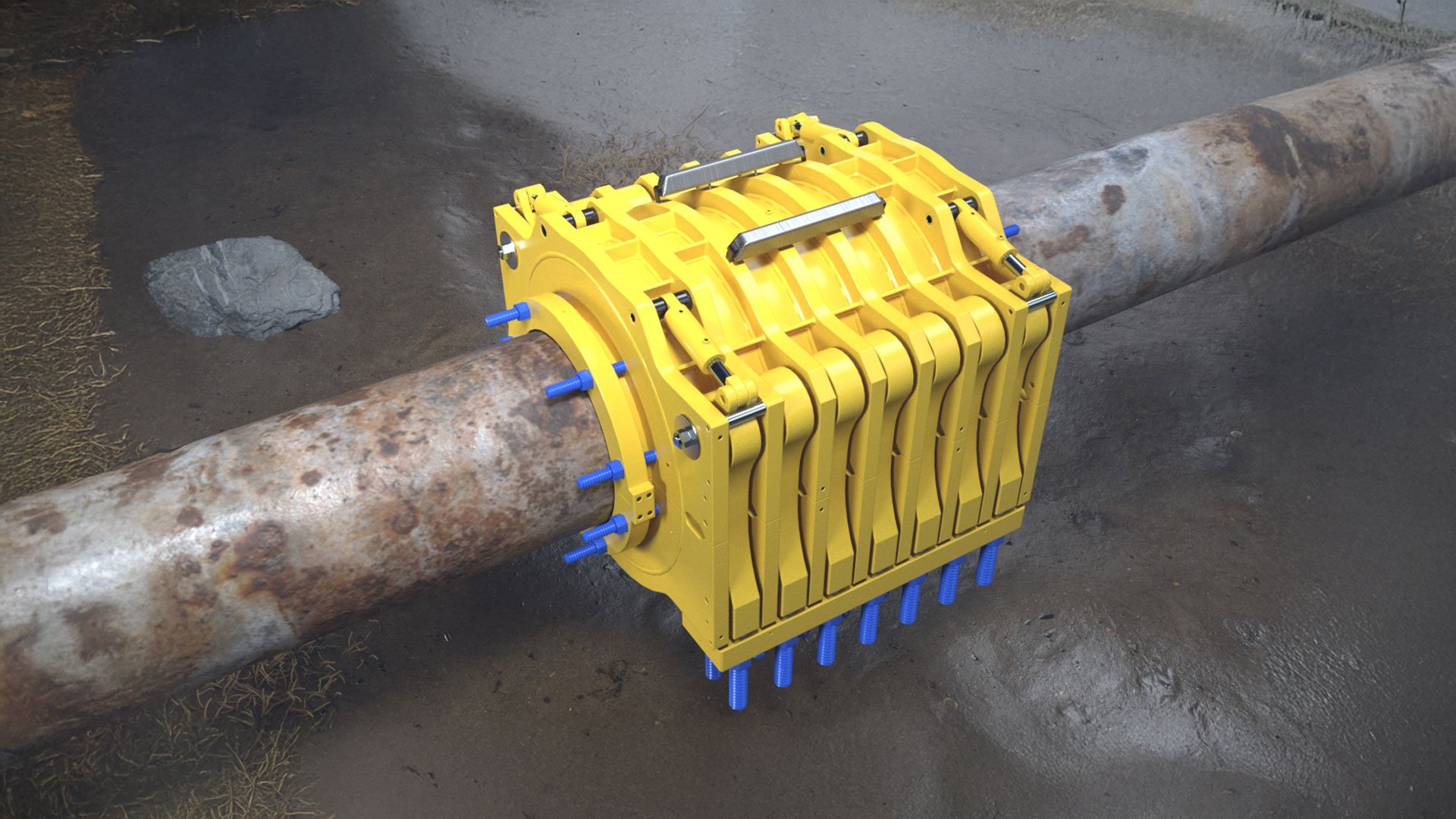
Subsea Flange Repair Clamp
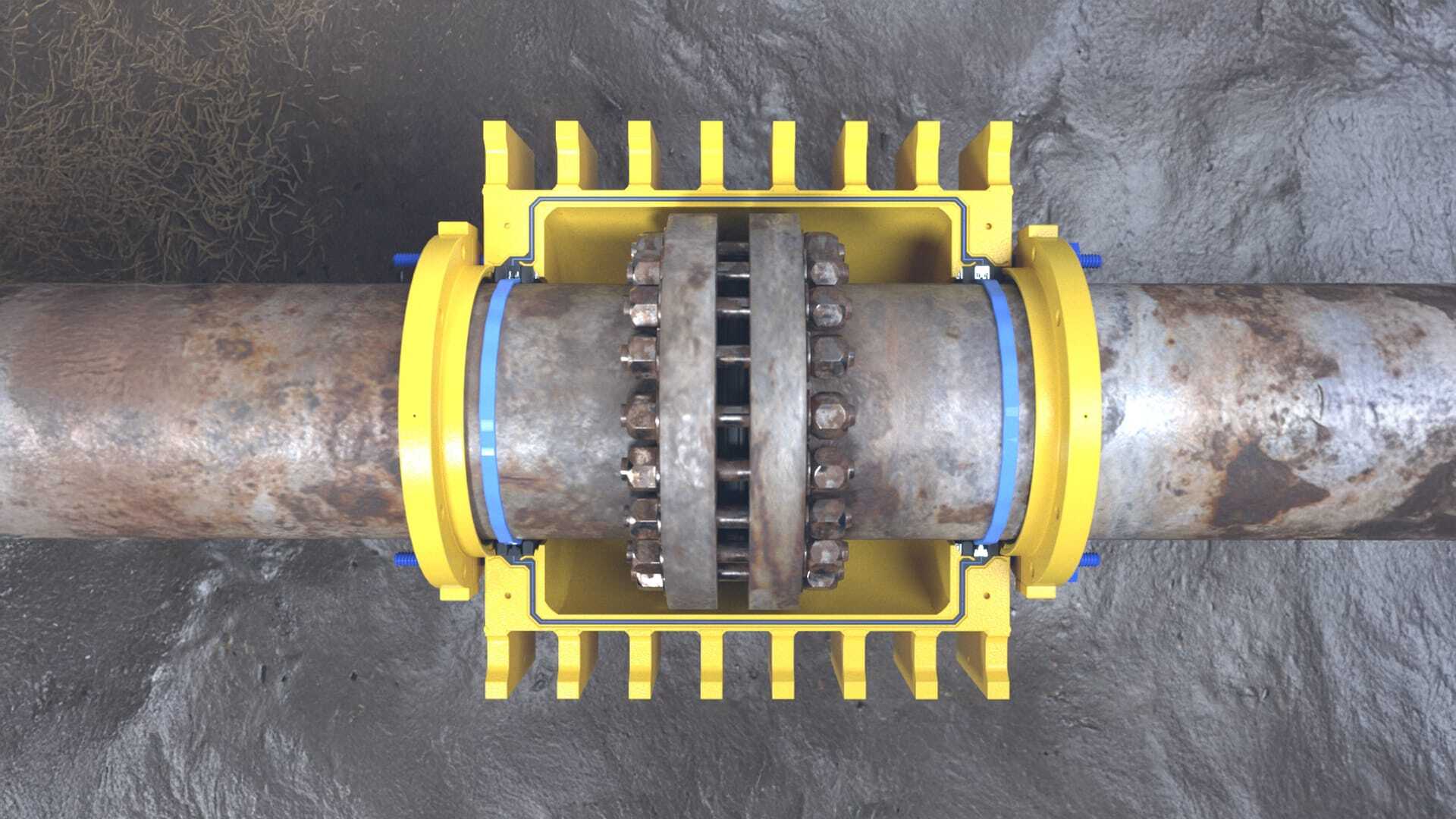
Subsea Repair Clamps
ROV-Installed Repair Clamps
At water depths beyond the reach of divers, or where the operational profile of a field demands a fully remote repair capability, STATS designs and manufactures repair clamps for ROV installation. Integrated hydraulic/mechanical control with an installation frame allows an ROV to position and install the clamp on the pipeline without diver intervention.
Two key factors set STATS ROV repair clamps apart from generic alternatives. First, each clamp is designed specifically for the client's pipeline - to their exact dimensions, material specifications, and operating conditions. Second, where a client already has an ROV installation system in place, STATS can design our clamp to retrofit into that existing framework. This means the client is procuring a new clamp, not a new installation system - a significant commercial and logistical advantage.
ROV-Installed Repair Clamps: What You Need to Know
- Application: For water depths beyond safe diver working limits - typically from around 300 metres and deeper. STATS has provided ROV repair clamp solutions for pipelines at 1,500 metres water depth and beyond.
- Lock Cage Design: ROV-deployed clamps use the lock cage configuration as standard. Lock bowls engage hydraulically via a pre-machined tooth profile - enabling the clamp to be fully set and locked without diver intervention. The independent lock actuation is particularly well-suited to hydraulic ROV deployment.
- Retrofit Compatibility: Where operators have an existing ROV installation system or recovery frame, STATS can design our clamp to integrate with it, avoiding the need to procure new deployment equipment.
- Bespoke Engineering: Every ROV repair clamp is engineered to the client's specific pipeline conditions and water depth requirements.
- EPRS Option: ROV repair clamps can be manufactured, tested, and held as part of a client's Emergency Pipeline Repair System (EPRS), ready for rapid deployment in the event of a pipeline emergency. See the EPRS section below.
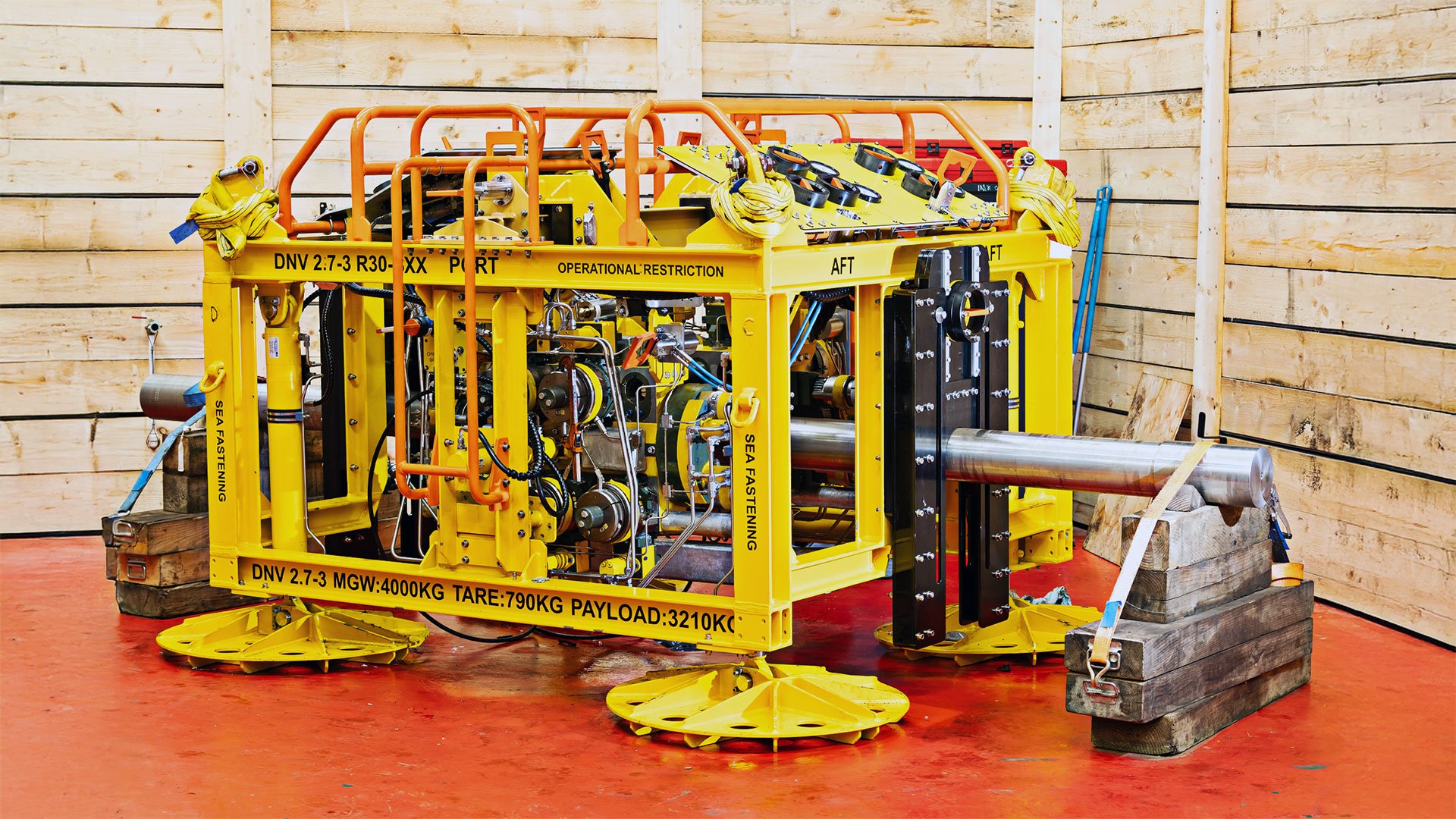
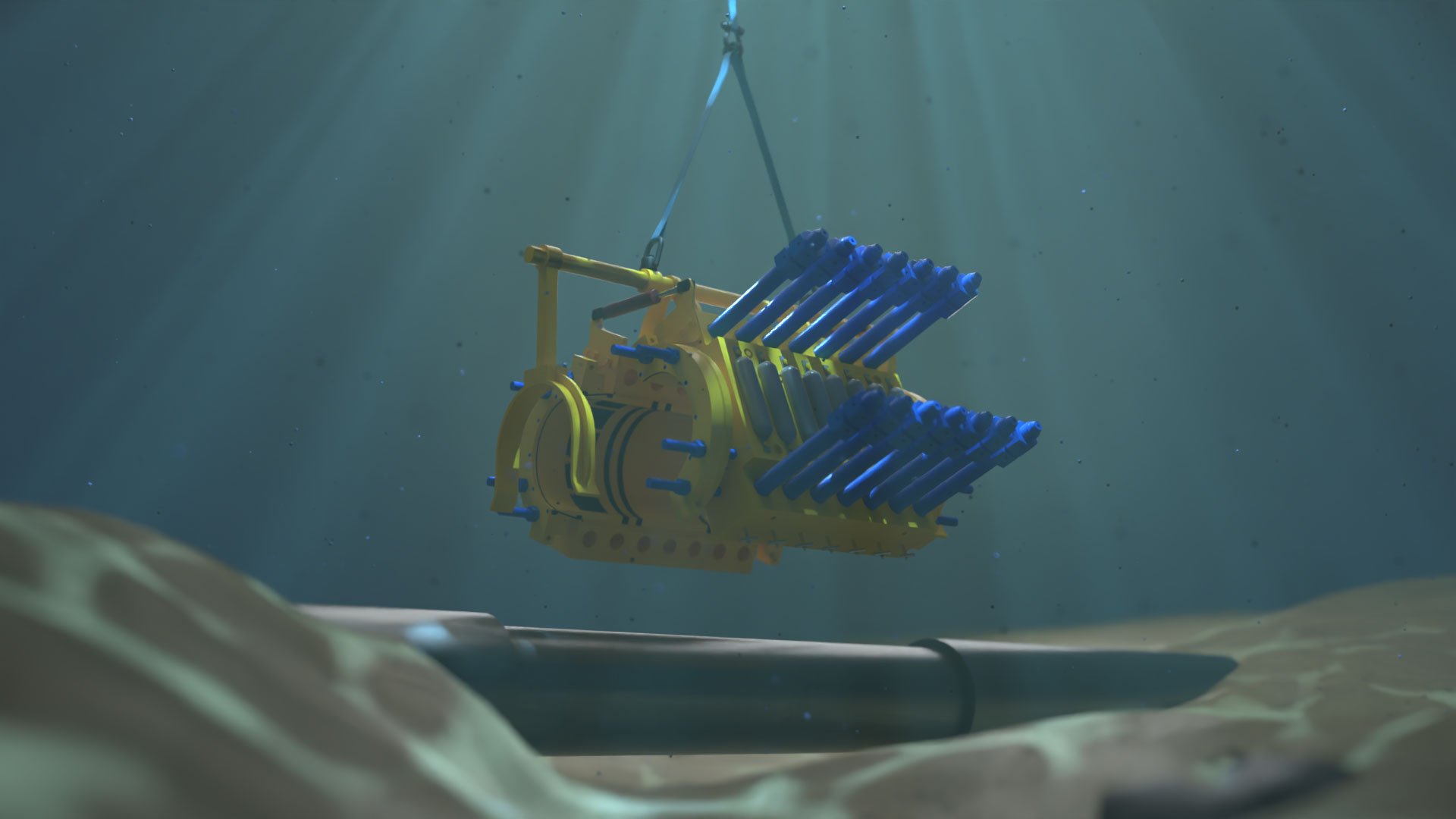
STATS Subsea Repair Clamp 4C Solutions ROV Deployment Frame
ROV installed structural repair clamps utilise hydraulic bolting to enclose the two halves of the clamp and energise the dual seal and lock design. Clamps can be designed to exact project requirements, accommodating a range of defects, such as leaks or mechanical damage on straight pipe sections, bends or flanges.
An installation frame is primarily used to safely land on the seabed, taking account of topography and seabed type where the clamp will be installed. Often the frame is designed with adjustment for pipelines that are sloped or on uneven surfaces.
The clamp halves are brought together by means of opposing hydraulics cylinders which are in turn controlled via an ROV interface panel.
The ROV controlled bolting is tensioned via the same control panel. Following a controlled installation on the pipeline the dual seal annulus (back seal) test port is used to prove seal integrity. ROV clamps are supplied configured as dual seals with taper locks as standard. Seal testing is performed via the ROV with no downlines from the vessel required which makes this system suitable for deep water applications.
STATS can collaborate with installation frame suppliers and has developed a growing track record through its established cooperation with 4C Solutions.
About STATS' Lock Cage Design
For subsea repair clamps 8" and above, the lock cage configuration is not a premium option - it is STATS' standard design. Understanding why requires a brief look at what the lock cage actually does differently, and why it matters in a subsea repair context.
The Lock Cage Design
Why We Use The Lock Cage Design as Standard
In a traditional clamp design, the structural locks sit inside the pressure boundary of the clamp. This creates a series of engineering compromises: the locks must be assessed for compatibility with the pipeline fluid (a particular concern in sour service environments); the combined setting load of seals and locks acts on the pipe simultaneously; and the clamp housing must be sized to carry the full combined separation load, making it heavier and more complex.
The lock cage design moves the structural locks to outside the pressure boundary. This single change delivers a cascade of practical benefits - for the clamp, for the pipeline, and for the installation process.
What the Lock Cage Design Delivers: Key Advantages
- Seals tested before locks are set: With locks outside the pressure boundary, seals can be fully set and pressure-tested independently. If a seal test is not acceptable, the clamp can be adjusted without removing it from the pipe - a significant advantage when every diver hour or ROV hour is costly.
- Lower load on the pipe and clamp housing: Because the locks sit outside the pressurised zone, the separation load they carry is offset by the pipe's internal pressure. This reduces the structural load on the clamp housing, allowing a lighter forging and fewer closure bolts - making the clamp more economical to manufacture and easier to handle during installation.
- Individual lock actuation for oval and deformed pipe: Each lock segment is individually actuated, stroking independently to fully engage the pipe wall regardless of ovality, seam weld caps, or minor deformation. In a traditional design, a single compression ring drives all locks simultaneously - meaning oval pipe either forces full contact at the major axis (risking pipe damage) or results in incomplete lock engagement. The lock cage design accommodates real-world pipe conditions.
- NACE compliant for sour service: By positioning hardened lock components outside the pressure boundary, the lock cage design prevents contact between locks and corrosive pipeline media. This is the correct approach for sour (H₂S) pipelines and eliminates the risk of hydrogen embrittlement in the lock components.
- Optimised for ROV deployment: Lock bowls engage with a pre-machined tooth profile on the clamp bore - functioning like a massive self-energised ratchet. This allows locks to be fully set hydraulically, making the lock cage design the optimum configuration for ROV-deployed clamps where manual bolt tensioning is not an option.
- Applicable across all environments: The same lock cage design principles apply equally to diver-installed and ROV-deployed clamps, onshore, topsides, and subsea. The technology is consistent, and the manufacturing and operational experience behind it is extensive.
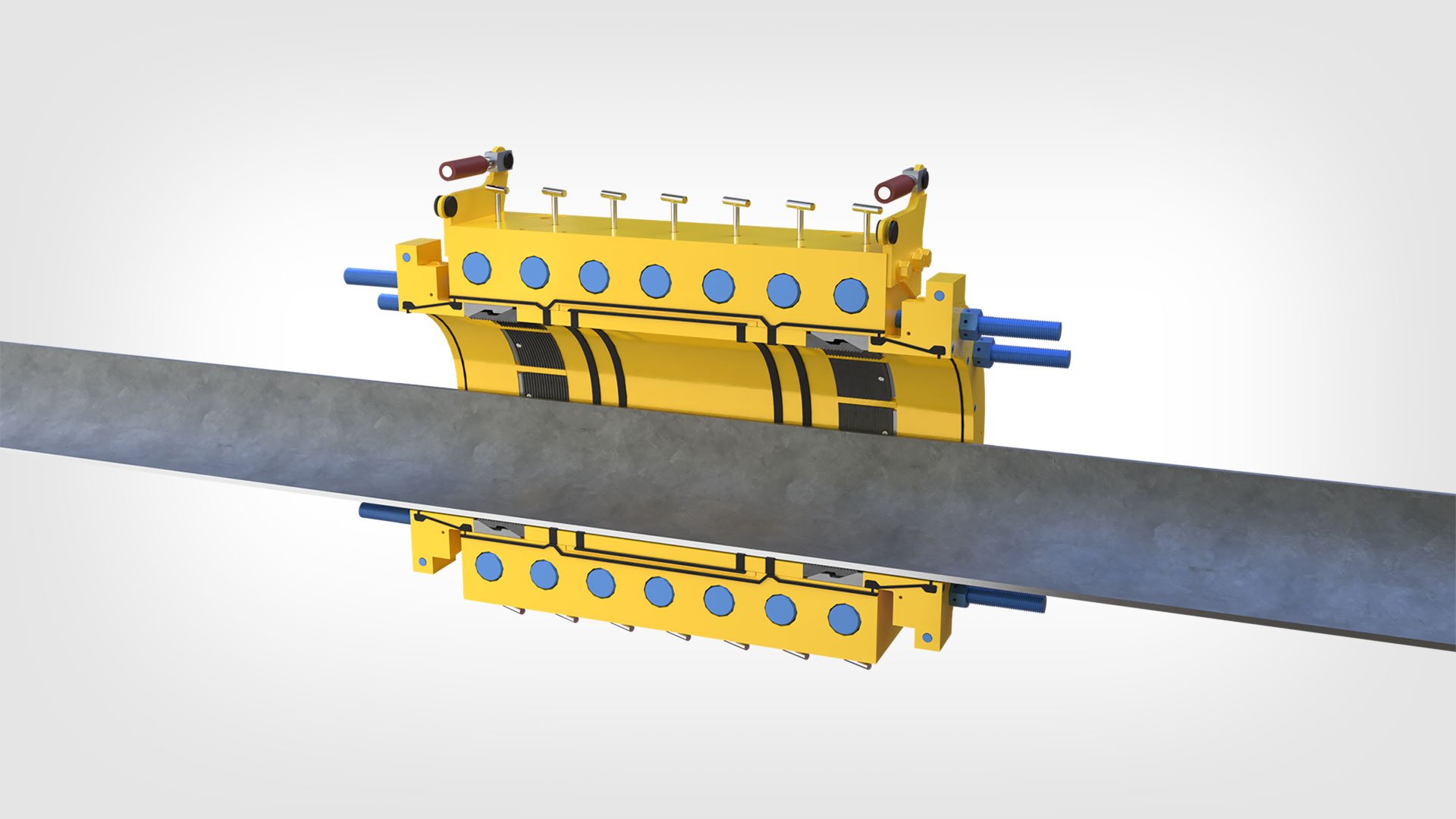
Lock Cage Design Independent Locks & Seals
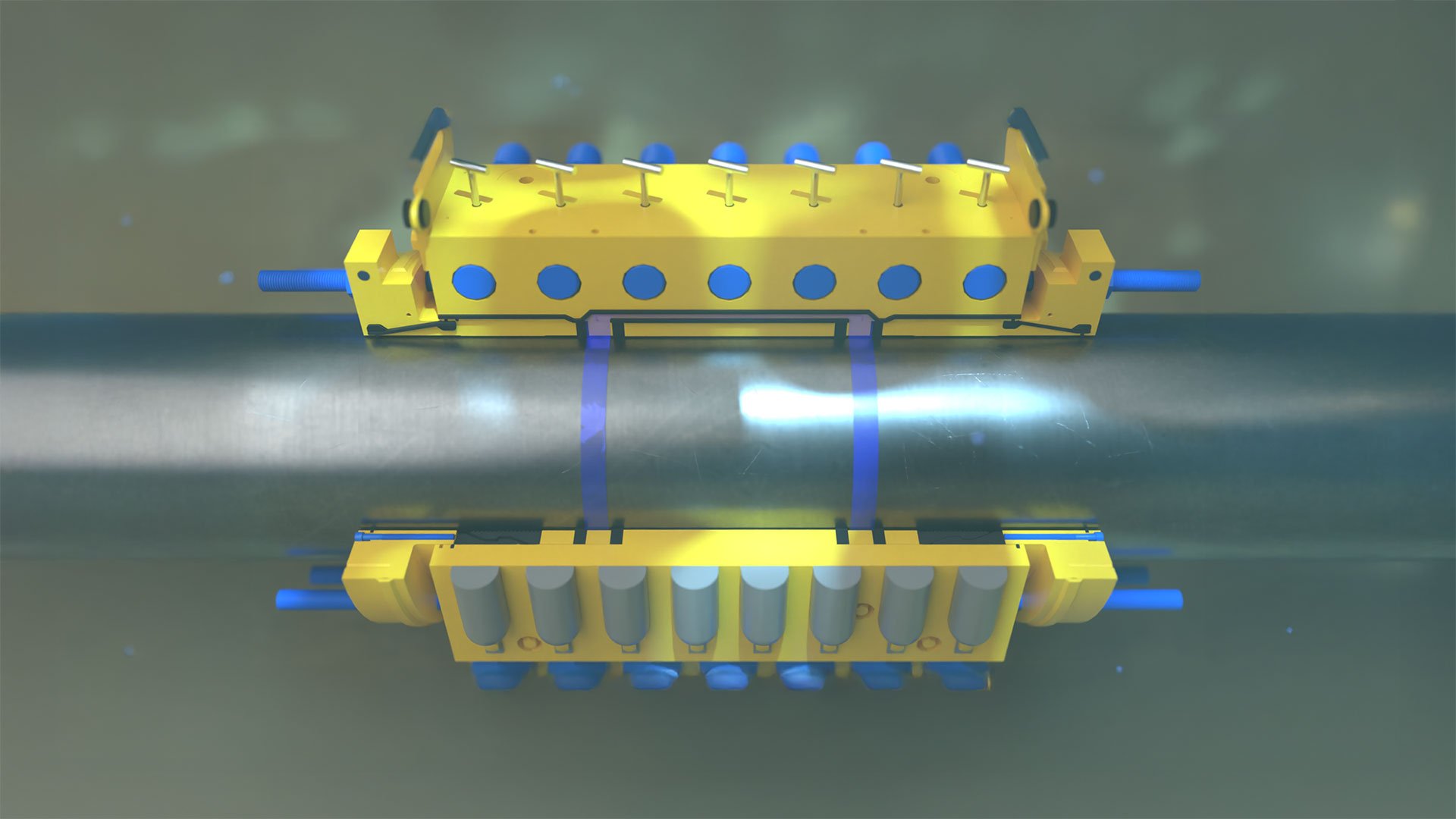
Subsea Repair Clamps as Part of Your EPRS
A subsea pipeline emergency rarely comes with warning. When it does, the ability to deploy a repair solution quickly - without the lead time of a bespoke manufacturing programme - can mean the difference between hours offline and weeks of lost production.
Emergency Pipeline Repair Systems
Repair Clamps For EPRS
STATS subsea repair clamps can be manufactured, tested, and supplied as part of your Emergency Pipeline Repair System (EPRS): a pre-engineered, pre-qualified repair toolkit held in readiness for rapid deployment when required. STATS offers long-term maintenance and service agreements for EPRS equipment - typically structured over 10 or 15 years - ensuring clamps remain inspection-ready and call-off-ready throughout the agreement period.
STATS technicians are always included in repair clamp deployments, providing the in-field expertise to support safe, efficient installation whether the job involves divers, ROVs, or both.
Subsea Repair Clamps in EPRS: What You Need to Know
- Pre-engineered and pre-qualified: EPRS clamps are designed and tested before they are needed, so when an emergency occurs, the solution is ready - not in the design phase.
- Long-term service agreements: STATS offers maintenance and service agreements structured over 10–15 year periods. Regular inspection and recertification ensures equipment remains deployment-ready throughout.
- Rapid call-off: EPRS clamps are held in strategic locations and can be mobilised quickly in response to a pipeline emergency, minimising response time and production downtime.
- Multi-skilled technicians: STATS technicians are trained across clamp installation and associated subsea pipeline operations, reducing the number of contractors the client needs to manage on a vessel.
- Compatible with ROV deployment: EPRS clamps can be configured for ROV installation, including retrofit compatibility with existing ROV deployment systems, for fields where diver access is not available.
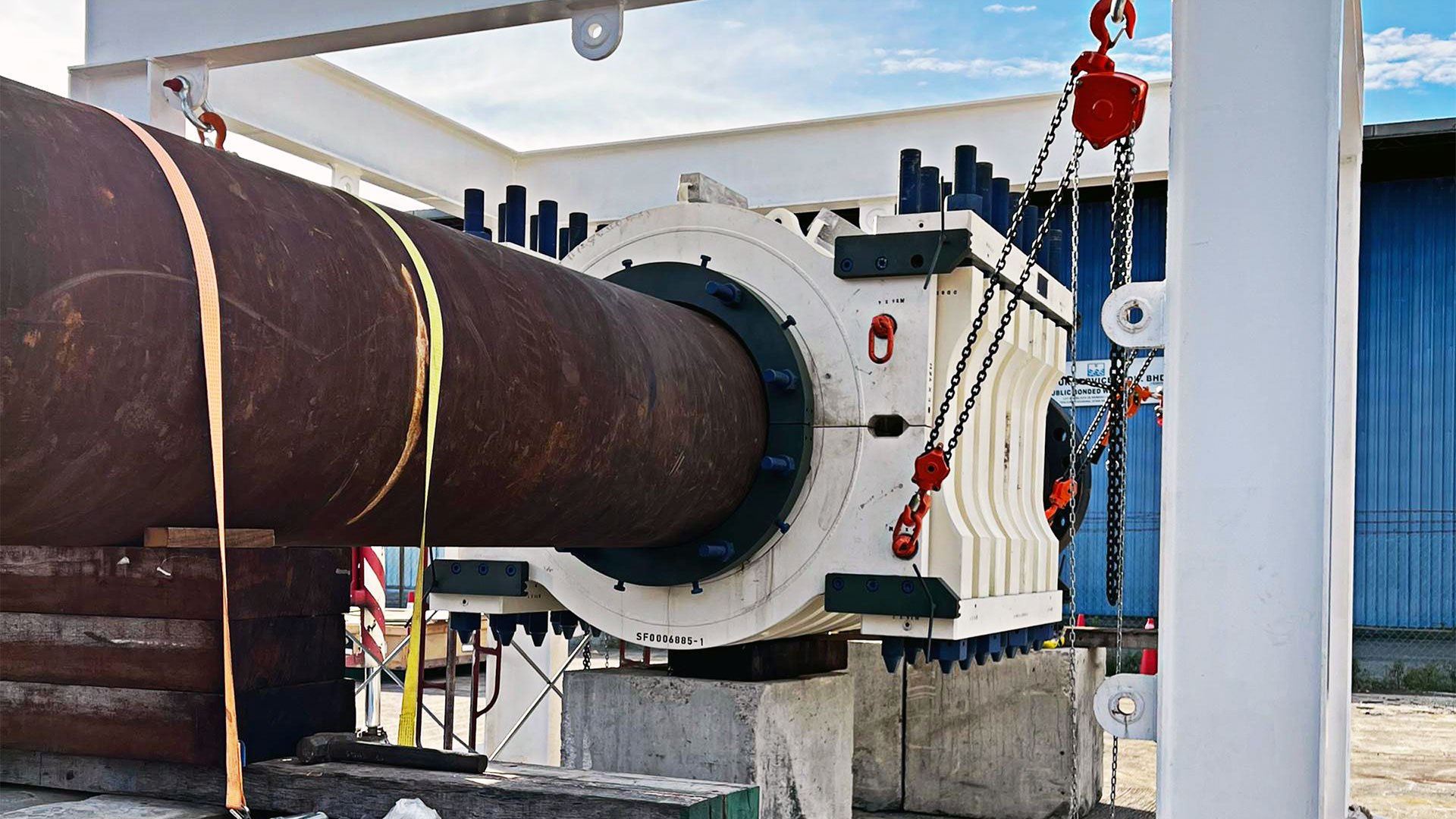
EPRS Repair Clamps
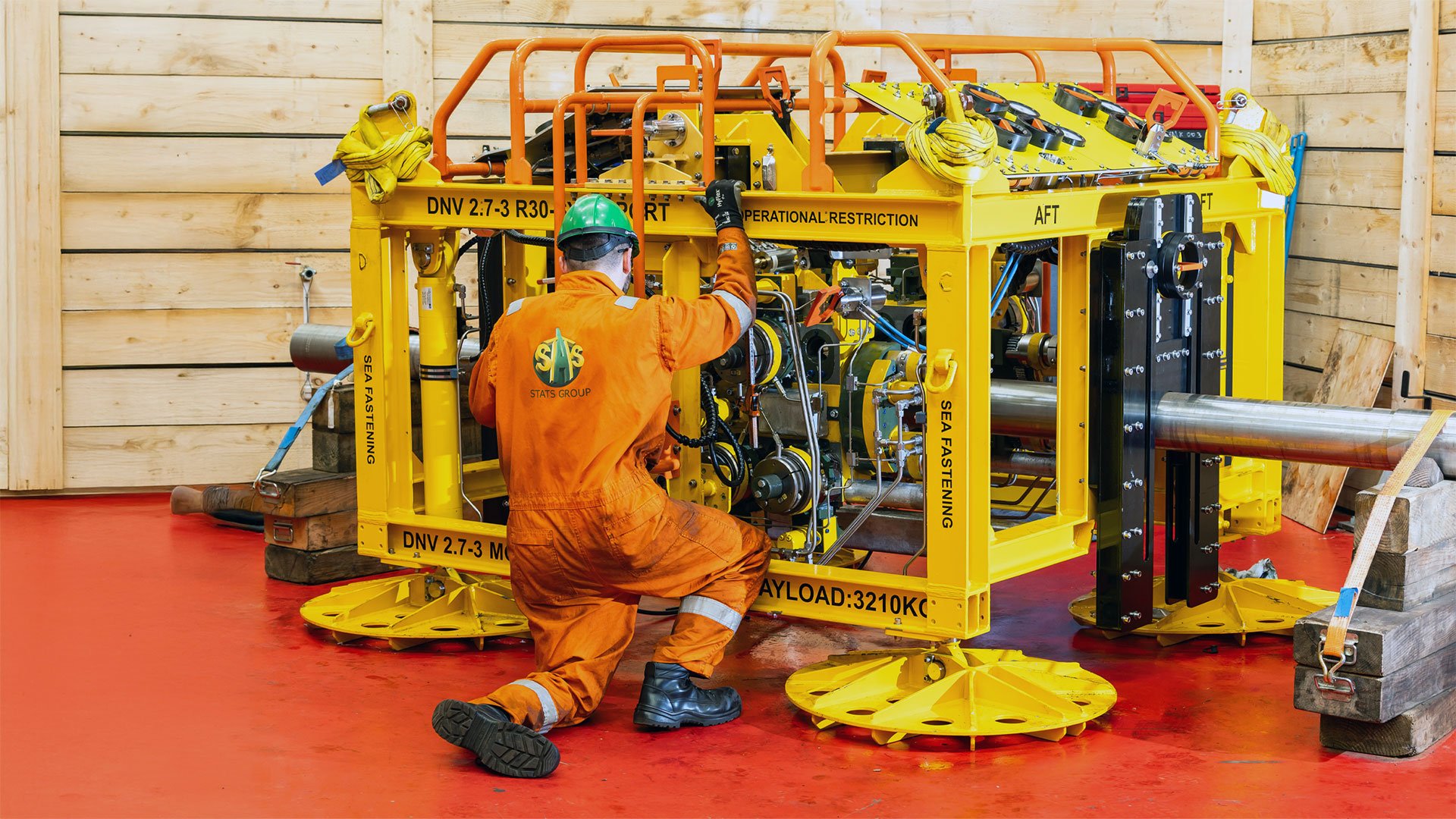
STATS & 4C Solutions ROV Operated Repair Clamps
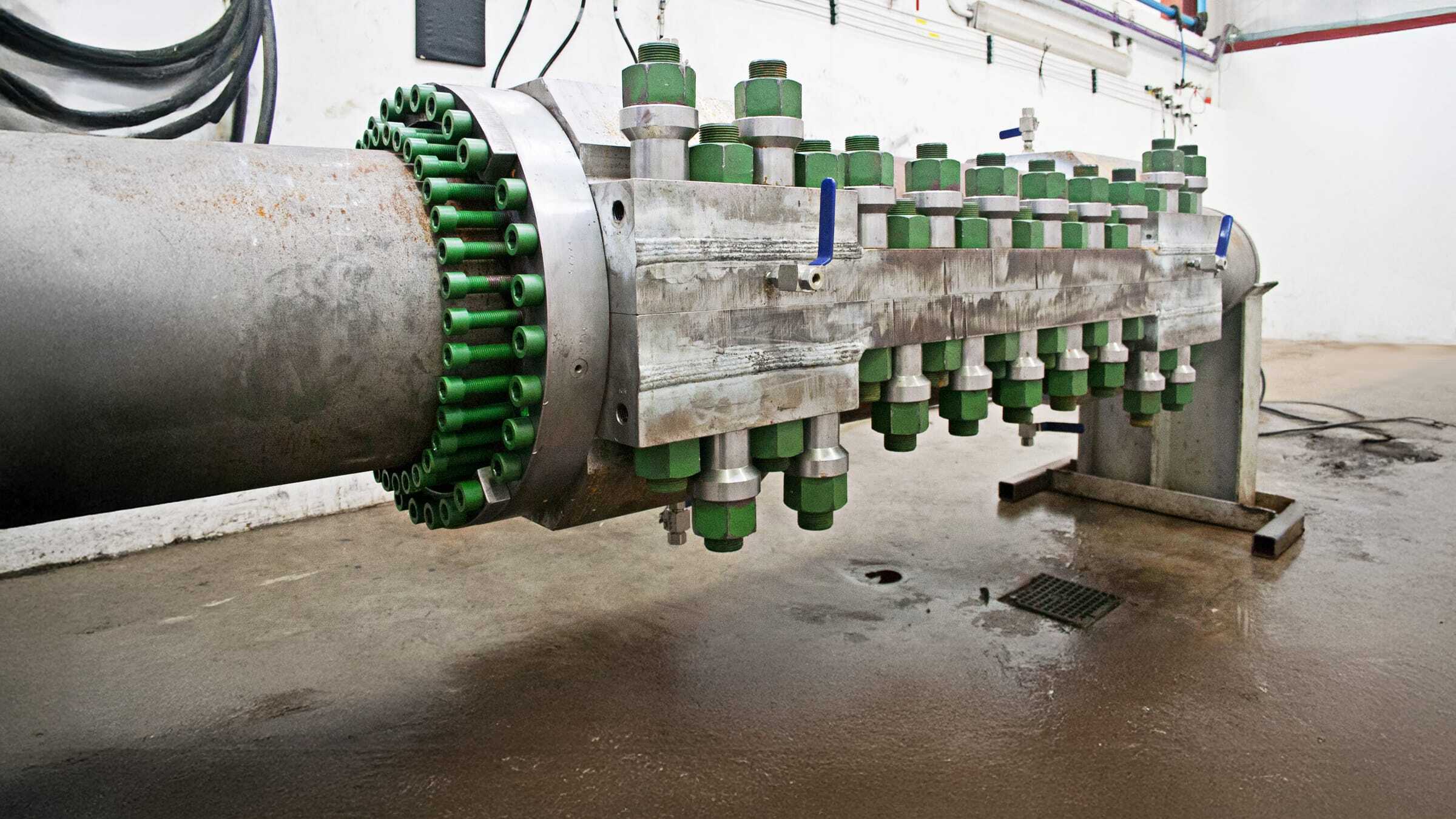
Pipeline Repair Clamps
Repair clamps play a critical role in maintaining pipeline and process pipe integrity, providing essential solutions for addressing leaks, restoring pressure containment, and offering structural support in diverse operational environments.
Complete Your Subsea Toolkit
STATS offers a full range of subsea intervention products designed to work alongside pipeline repair clamps in demanding offshore environments.
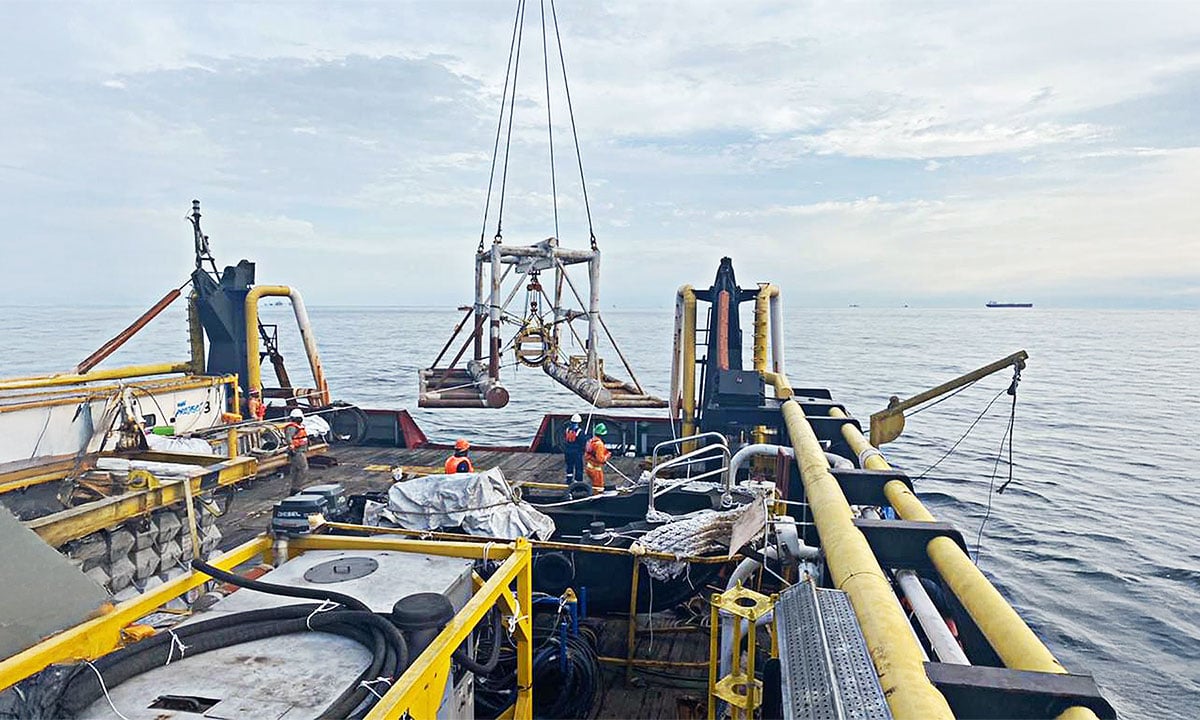
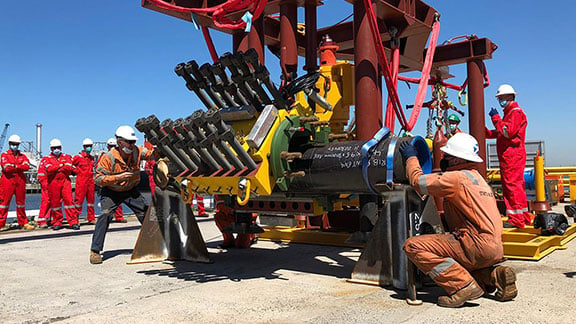
Subsea Hot Tap Clamp
For harsh undersea conditions, including full pipe separation loads and corrosive environments. Subsea hot tap clamps are available in specifications to match a variety of pipeline diameters, wall thicknesses, fluid types and flow characteristics.
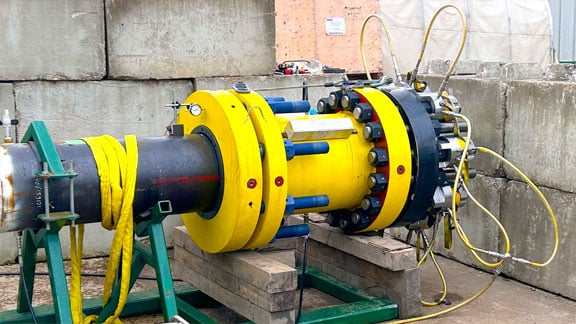
Subsea Mechanical Pipeline Connector
With no welding or hot work, SureConnect® subsea mechanical connectors provide a permanent, leak-free connection for pipelines, flowlines and risers, installed by divers, ROV or remote tooling.
Local Everywhere
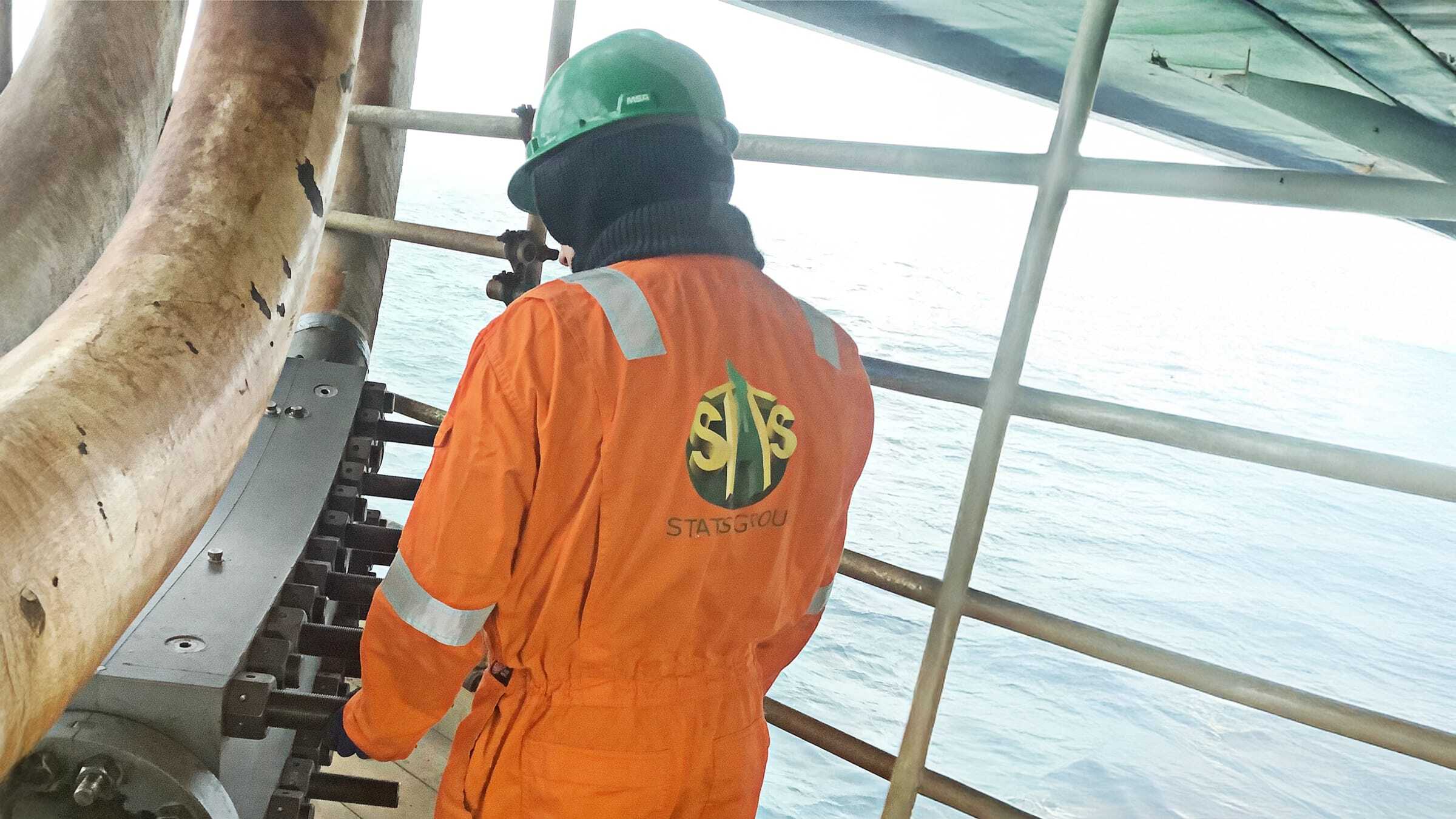
Instead of flying people and equipment all over the world, we've set up fully-functional bases in nine strategic locations. These bases enable us to employ local technicians, work with local manufacturers, and invest in local economies. They're a significant investment, but our regional bases are key to delivering the best possible service for our clients - and minimising the environmental impact of our work.
