
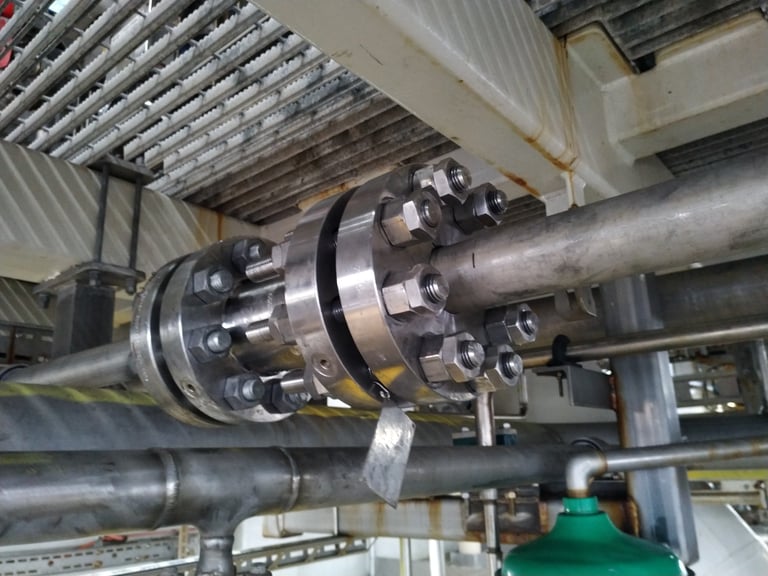
STATS Group is steadily building a reputation for innovative isolation solutions and integrity services in Europe’s energy industry.
The Scottish company is bringing its engineering solutions to Europe where there’s increasing demand for pressurised pipeline isolation, intervention, testing and integrity services for aging facilities and pipelines.
The energy industry across Europe is being asked to deliver more from existing infrastructure while preparing for a transition to low carbon fuels. Operators are under pressure to maintain security of supply and reduce shutdown durations, while improving worksite safety and limiting emissions during maintenance. In that environment, the ability to isolate, intervene, test and repair piping and pipeline systems safely without unnecessary disruption has become a strategic requirement.
For STATS Group, that requirement is creating new opportunities across Scandinavia and continental Europe. Since being founded in 1998, the Aberdeenshire-headquartered company has built a reputation in the North Sea and international energy markets for pressurised pipeline isolation, intervention, testing and integrity services.
STATS Group business development manager Nick McKay says: “Our core proposition is straightforward: provide operators a safer and more efficient way to maintain critical infrastructure while reducing downtime, avoiding unnecessary intrusive activity and supporting reliable asset performance.”
International Expertise, Locally Delivered
That proposition is now being carried deeper into European markets through a combination of proven technology, local partnerships and focused business development. STATS is strengthening its presence in Scandinavia through its distributor arrangement with Asset Integrity AS in Stavanger, targeting opportunities in Norway, Sweden and Denmark. At the same time, a strategic partnership with Patriot International is extending access to STATS’ mechanical pipe connectors, pipe end plugs and localised hydrostatic weld testing tools across the Netherlands, Belgium, France, Germany, Luxembourg and Spain.
Across mature European energy systems, operators face ageing assets, tighter regulatory expectations, scheduled shutdown constraints and a growing need to manage brownfield modification work with minimal interruption. Traditional methods can require large sections of pipework to be flooded, hydrotested and de-watered, increasing downtime, resource use and environmental impact. Localised hydrostatic weld testing technologies offer a more targeted alternative, allowing welds, fittings and off-takes to be verified without subjecting wider systems to unnecessary testing activity.
STATS’ wider portfolio is aligned with those priorities. The company’s DNV type-approved isolation tools are designed to provide leak-tight double block and bleed isolation, enabling maintenance and repair on pressurised pipeline infrastructure. Its BISEP® line stopping technology has been deployed in demanding, high-criticality applications, including a world-first live pipeline isolation project in high-pressure hydrogen in the UK and high-pressure, dense-phase liquid CO2 pipelines in the US. As Europe assesses both repurposed and new pipeline infrastructure to support the energy transition, proving that isolation and intervention technologies developed for hydrocarbon applications can also support hydrogen, carbon capture and other lower-carbon infrastructure offers significant benefits to European operators looking to reduce cost and risk associated with shutdown-dependent strategies.
.jpg?width=1600&height=1200&name=Image%20(9).jpg)
STATS Group's patented BISEP® tool safely isolated a high-pressure hydrogen pipeline in the UK.
Reducing Risk During Asset Maintenance
Scandinavia combine established oil and gas activity, high standards of operational assurance and a clear drive for technologies that reduce risk during maintenance shutdowns and turnarounds. STATS’ agreement with Asset Integrity gives customers in these markets more direct access to Process Plant Solutions, including hydrostatic weld testing tools, ambient barrier tools and weldless pipe connectors. Asset Integrity’s relationships with Norwegian operators and Tier One contractors provide the local knowledge needed to translate technical capability into practical project delivery and local personnel.
Recent milestones underline the relevance of that approach. STATS has developed mechanical pipe connectors qualified and DNV type-approved for installation on titanium pipework, responding to increased demand in the Norwegian sector for cold-work alternatives. STATS has also completed its first Tecno Plug isolation project in Finland, enabling valve and piping replacement at a gas storage cavern facility. These are not simply isolated project wins; they point to a broader market requirement for specialist intervention technologies that can be mobilised quickly and applied safely in challenging applications.
Improving Access to Specialist Technology
On the continent, the Patriot International agreement adds a complementary route to market. By holding STATS equipment at facilities in the Netherlands and Belgium, Patriot can help reduce shipping times and costs while improving responsiveness for pipeline clients across mainland Europe. That matters because repair, isolation and testing requirements are often time-critical. When a shutdown window is tight, or when an unexpected integrity issue emerges, access to the right tool and the right technical support can determine whether work is completed efficiently or constrained by logistics.
The technologies covered by the Patriot partnership address some of the most common challenges in asset maintenance and modification. Joanna Mountford, Business Development Manager at STATS Group explains: “Localised weld test tools can avoid the need to flood and de-water significant pipe volumes, helping to cut production downtime and reduce environmental burden. Inline weld test tools can also serve a dual purpose, acting as a verified vapour barrier before hot work and then being repositioned to test a new flange, fitting or off-take once welding is complete. Mechanical pipe connectors provide a cold-work alternative for repairs, tie-ins and the capping of redundant lines, reducing reliance on welding and supporting faster, lower-risk execution.”
.png?width=474&height=636&name=30in%20Mechanical%20Connector%2c%20Asset%20Integrity%2c%20Onshore%20Norway%20(1).png)
STATS Group's 30-inch mechanical connector in Norway .
The strategic significance is that STATS is positioning itself not only as a supplier of specialist tools, but as an enabler of more efficient asset integrity activities. The company’s services span pipeline construction, maintenance, asset life extension, emergency response, decommissioning and emerging energy applications. That breadth is increasingly valuable to European operators who must balance reliability of existing hydrocarbon infrastructure with investment in lower-carbon systems. A technology that reduces maintenance duration or avoids unnecessary system disturbance can help improve safety and environmental performance while maintaining vital security of supply.
Local Presence, European Reach
The appointment of Mike Kaiser as Business Development Manager, Europe adds another important element. Based in Emmen in the Netherlands, Kaiser is tasked with strengthening customer reach in traditional oil and gas markets while developing opportunities in hydrogen and carbon capture. That local presence is important. European markets are not consistent; each has its own regulatory framework, operator base, procurement routes and project drivers. Building credibility requires more than exporting technology. It requires relationships, application knowledge and the ability to support customers before, during and after deployment.
What makes the current expansion notable is the blend of global engineering capability and local market access. STATS already has an international footprint and a record of supplying complex isolation and intervention services across onshore, topsides and subsea environments. Through Asset Integrity and Patriot, it is moving closer to European customers, improving availability of critical equipment and giving operators access to personnel who understand regional project conditions.
Kaiser said: “Operators are increasingly looking for methods that reduce hot work, minimise emissions associated with maintenance, avoid unnecessary water handling and shorten shutdown schedules. Cold-work connectors, localised testing and leak-tight isolation technologies all directly reduce those pressures. They allow integrity work to be planned with greater confidence and executed with fewer disruptions, which is precisely the type of value proposition mature European energy markets are seeking.
“For Scandinavia, the value lies in applying proven technology to some of the industry’s most technically demanding assets. For mainland Europe, the opportunity is to increase our local presence and availability of specialist tools and technology in markets where operational efficiency, safety and energy transition readiness are converging.”
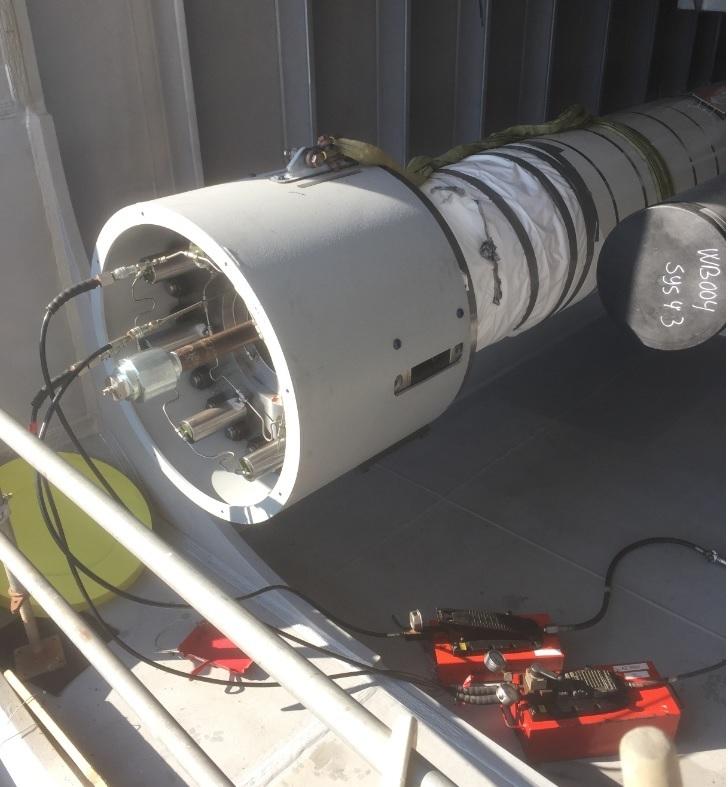
The E-PEP™ is a fast, weldless alternative to traditional welded end caps.
As Europe’s energy system evolves, infrastructure integrity will remain central to both security of supply and decarbonisation. The safest and most efficient operators will be those able to conduct routine maintenance with robust, proven solutions that reduce unnecessary system downtime and return assets to service quickly. By extending its isolation, intervention and testing capabilities through trusted partners across Scandinavia and continental Europe, STATS is aligning itself to support and strengthening its role as a specialist technology partner for the next phase of European energy infrastructure.
Written by Energy Voice