
36" BISEP with Integrated bypass enables pipelines compliance without disrupting gas supply, Idaho, USA
Tool - BISEP Line Stopping Tool
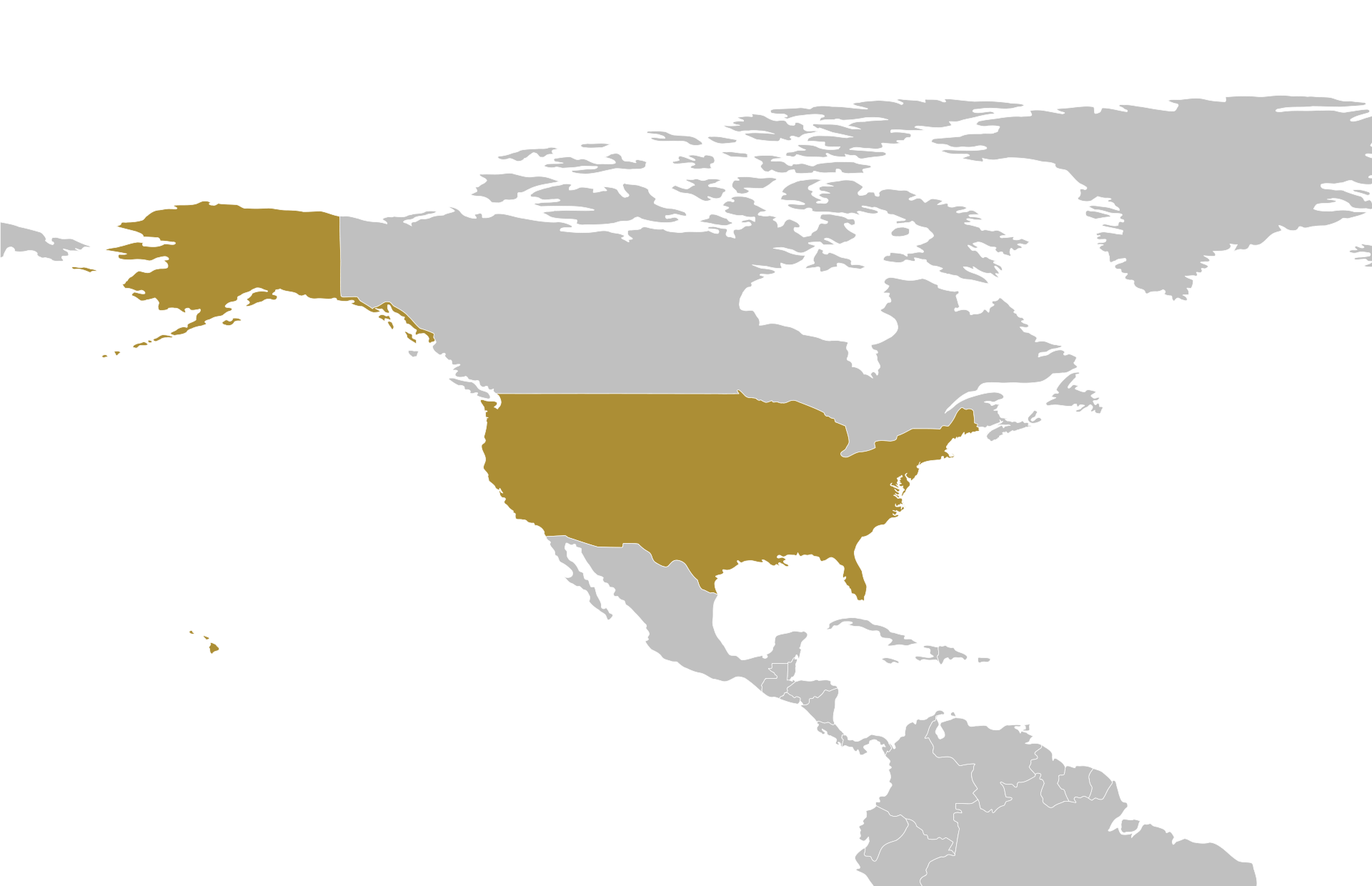
Location - USA
Operating Environment - Onshore, Pipeline Transmission
Pipeline Medium - Gas
Activity - Tie-In / Reroute, Maintenance
As urban expansion brings growing populations closer to historically remote pipeline corridors, legacy infrastructure must be reassessed, not only to maintain reliability, but also to comply with strengthened federal safety standards. In 2024, the U.S. Department of Transportation’s Pipeline and Hazardous Materials Safety Administration (PHMSA) advanced this shift with significant revisions to the Federal Pipeline Safety Regulations. These amendments, responding to congressional mandates, National Transportation Safety Board recommendations, and extensive public input, introduced new integrity management requirements and tightened expectations for material traceability, periodic assessments, and reconfirmation of maximum allowable operating pressure (MAOP) for older, previously untested pipelines.
For one of North America’s major energy companies, these regulatory changes intersected with a rapidly transforming landscape. Decades of residential and commercial growth near two parallel 36-inch natural gas transmission lines (A & B) originally constructed in 1961 triggered new class location designations and, with them, a mandate to remediate the pipeline. To ensure compliance and uphold the company’s long-standing commitment to safe, reliable and affordable energy supply, the operator undertook a complex replacement project of line B involving two miles of new pipeline being laid and tied in. While line A was subject to a MAOP hydrotest, all activities were conducted while gas flow was maintained, ensuring a safe and reliable source of daily fuel to communities for cooking, heating, air conditioning and other daily essentials.
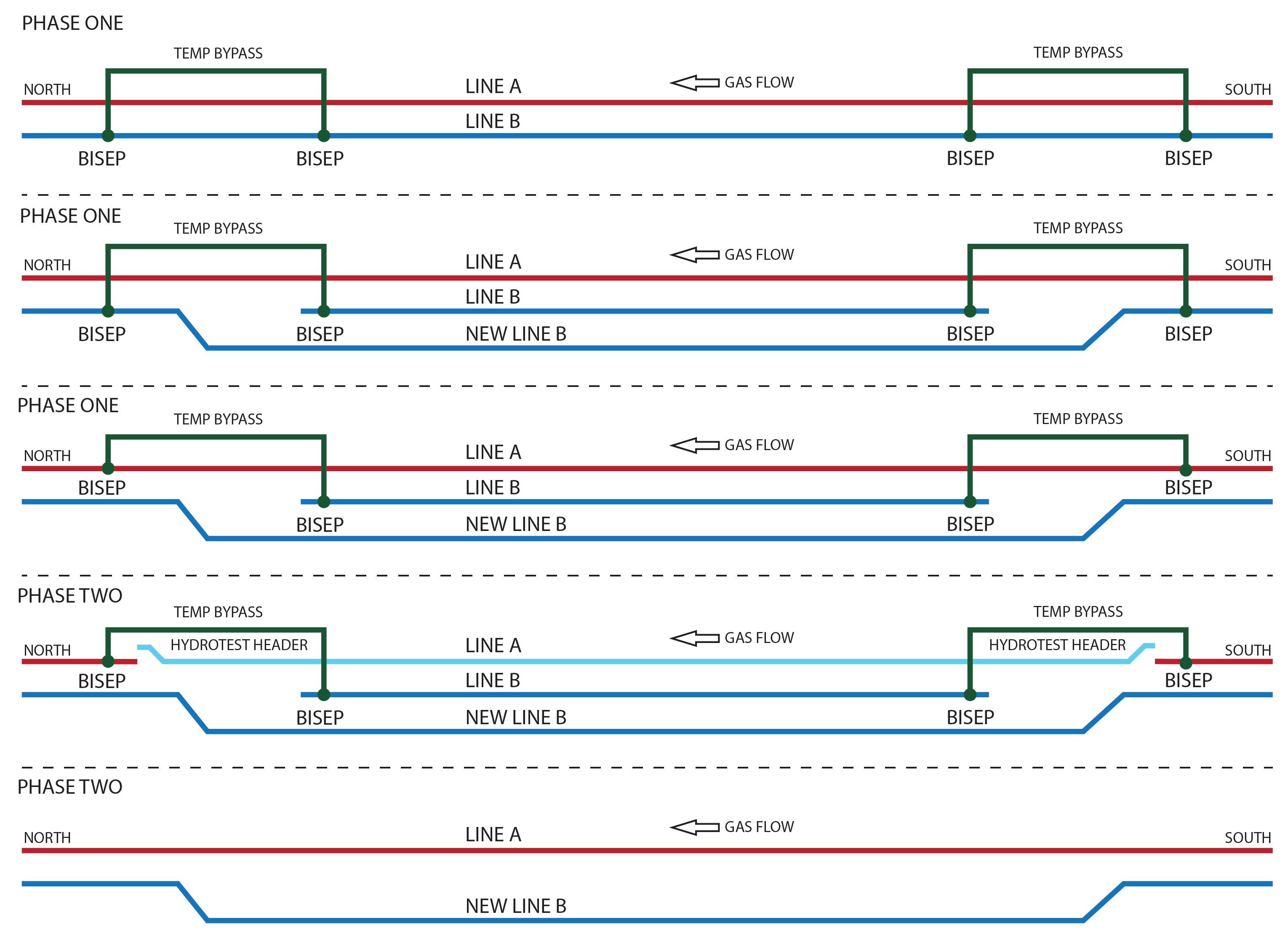 Phase one and two pipeline layout
Phase One - Pipeline Replacement
The operator required two sections (North & South) of pipeline B to be safely isolated, allowing breaking of containment and a new section of pipeline, totaling 2 miles, to be installed comply with U.S. Department of Transportation's Pipeline and Hazardous Materials Safety Administration's requirement for class location changes. To enable this, STATS deployed two 36” BISEP double block and bleed line stop tools at each location with an integral 30” bypass line to maintain product flow during remediation works (Figure 1).
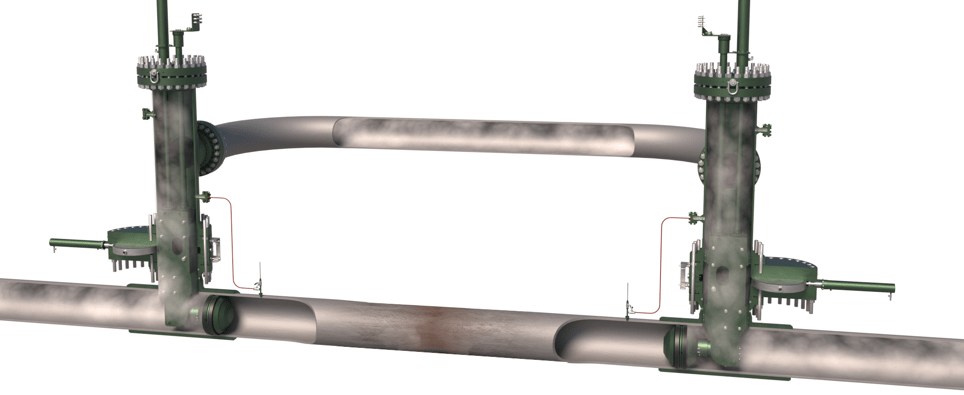
Figure 1 - 36" BISEPs & 30" integral bypass - line stop arrangement at each location (North & South)
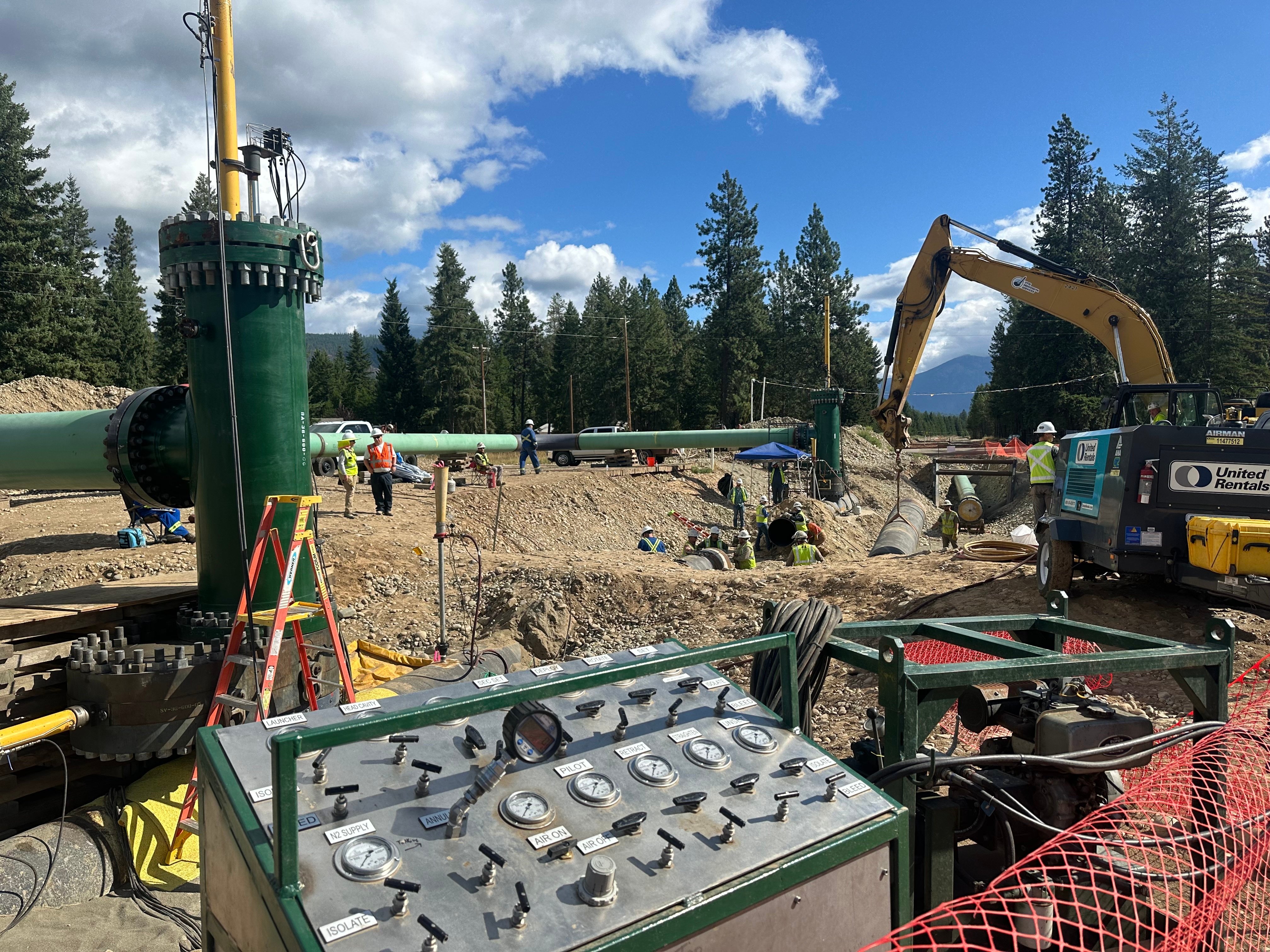
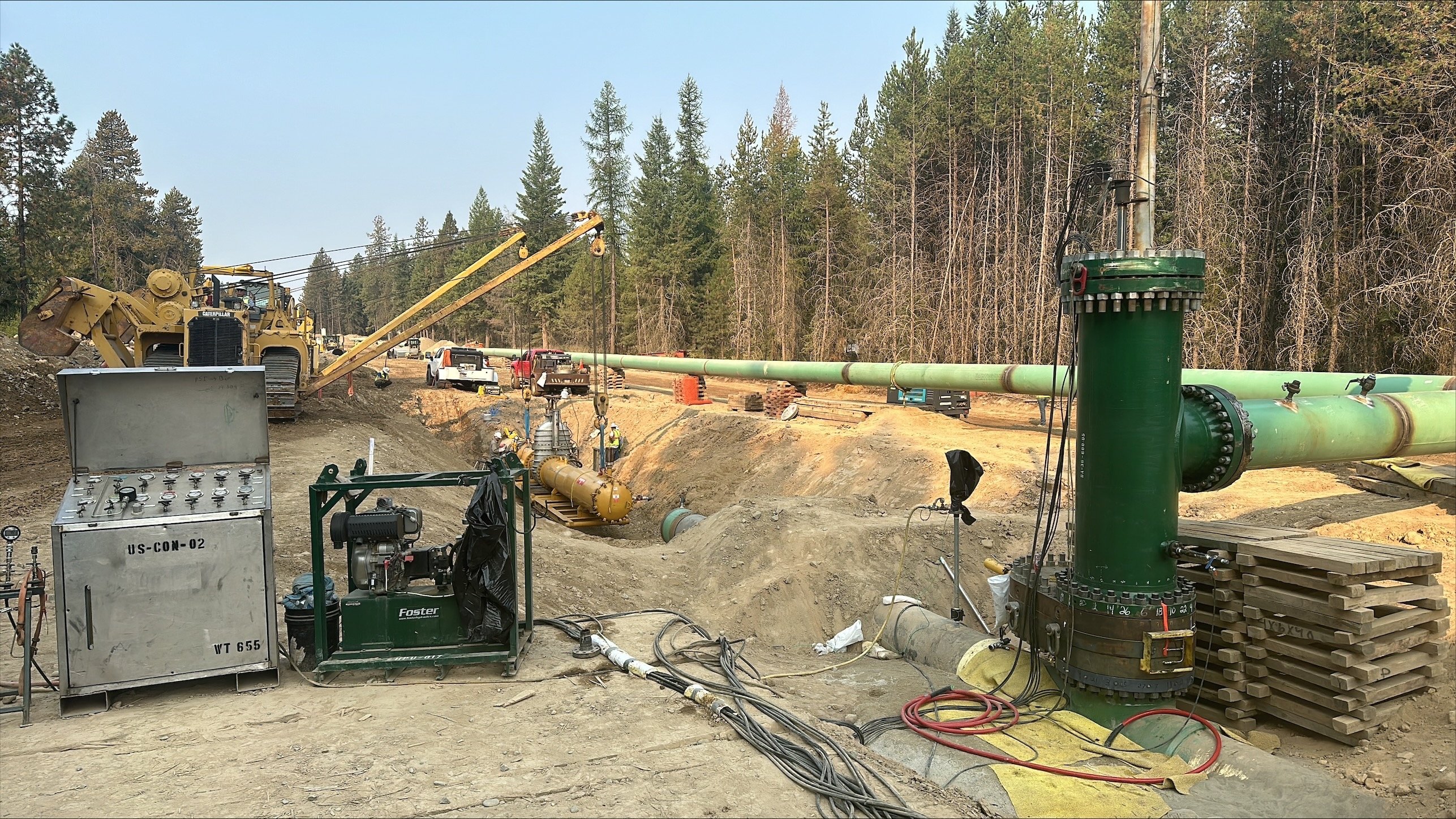
To enable the BISEPs to be deployed, the operator excavated the pipelines and two 36” hot tap fittings were welded at each location, North and South. STATS installed their double block and bleed slab valves to the fittings and using their proprietary SureTap® hot tap drilling machines, cut access points into the pressurised pipeline at each location, recovering and removing the cut pipe (coupon). The slab valves were closed, allowing the hot tap machines to be depressurised and removed, with full bore access now provided, four BISEPs were installed (two at each location). The client then installed a 30” temporary bypass between the BISEPs at each location and the slab vales were opened allowing gas to flow through the bypass. While the pipeline was flowing (18-25 mph) and pressure at 882psi, each of the four BISEPs were deployed into the pipeline and hydraulically set.
The simple hydraulic deployment of the BISEP ensures controlled setting of the dual elastomer seals and ensures leak-tight isolation even in pitted or corroded pipelines, ideally suited to ageing pipelines. During isolation barrier proving, each seal was tested independently with full pipeline pressure in the direction of the expected pressure differential, proving both seals of the double block isolation are leak-tight. A 2” hot tap was then conducted between the BISEPs in the isolate section, allowing the trapped gas to be vented and purged. Following successful seal proving, the seal annulus void is vented, closed and monitored confirming isolation integrity throughout the isolation period.
With isolation certificates issued for the North and South locations, the sections of pipe between the BISEP were cut and removed, allowing the newly constructed pipeline B to be tied-in and leak-tested. (Figure 2).
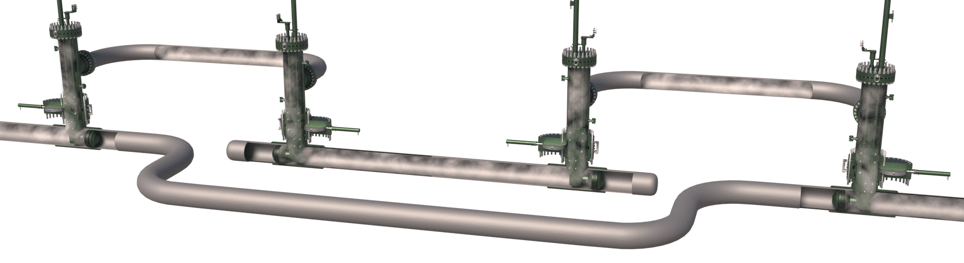
Figure 2 - New pipeline B tied in to North & South locations
Once the new line B was connected, packing, purging, filling, and equalization activities were completed to commission the new pipeline. At this stage the BISEPs at each location were unset and recovered into the launchers, allowing gas flow to continue through the new line B. The slab valves were closed, allowing the launchers and temporary bypasses and old pipeline section to be vented and purged.
BISEP Seal Testing & Verification Sequence
During the setting process, the pressure within the annulus (space between the primary and secondary seal) will rise as the annular space is compressed by the radially expanding seals. Monitoring this pressure to prove no pressure loss is an initial indication that the seals are isolating prior to the client venting or cross compressing the isolated section of the pipeline. The annulus pressure is continually monitored and the pipeline pressure in the isolated section of the pipeline is vented, thereby generating a differential pressure across the BISEP plugging head. Once pressure on the isolated side is fully vented the BISEP secondary seal is tested in-situ to above the pipeline pressure (normally 1.1 times pipeline pressure), in the correct direction. This proves the integrity of the secondary seal. The annulus is then vented to a safe area and locked-in. This allows the primary seal to be monitored for sealing performance to the full differential pressure and in the direction of the pressure threat. The secondary and primary seal tests provide proof of isolation prior to STATS issuing an isolation certificate and allow safe work to proceed in the isolated section of pipeline, such as breaking containment.
The BISEP provides a fail-safe isolation as the seals are activated and maintained by two independent mechanisms; hydraulic activation and pressure differential across the seals provided by the pipeline pressure. The differential pressure maintains self-energisation of the seals ensuring isolation integrity independent of the hydraulic control circuit.
The BISEP is the only hot tap installed line stop tool that satisfies the design criteria for DNV Type Approval for Pipeline Isolation Plugs. The design criteria satisfies the requirements for Pipeline Isolation Plugs to provide dual seal and isolation in accordance with Offshore Standards: DNV-OS-F101 (Submarine Pipeline Systems) and recommended Practices: DNV-RP-F113 (Subsea Pipeline Repair) and is code compliant with: ASME BPVC Section VIII, Division 2.
Phase Two - Hydrotesting
The second phase of the project was to isolate a large section of pipeline A (between North and South locations) to enable a MAOP hydrotest to be conducted. To enable this, a 36” hot tap fitting was welded onto line A at the North and South locations, a slab valve was installed and STATS SureTap hot tap machine drilled the line and recovered the pipe coupon. With access to line A established, the outer BISEPs at the North and South locations, were removed and installed onto the new hot tap fittings on line A. A Temporary 30” bypass line was connected from the BISEP on line A to the BISEP on the old line B. This configuration of BISEPs and bypass lines enabled line A to be isolated and gas flow maintained and redirected through old line B. With the BISEP’s hydraulically set and tested the isolated section of line A was depressurised and vented, allowing short sections of the line to be removed. With access to either end of line A created while flow was maintained, the client could then install manifold test ends to each end and conduct a MOAP hydrotest on line A. The successful test allowed line A, installed in 1961, to comply with U.S. Department of Transportation's Pipeline and Hazardous Materials Safety Administration's requirements. With the test manifolds removed, line A was reconnected, filled and repressurised, allowing the BISEPs to be recovered to the launchers. The slab valves were closed and the bypasses and old line B were depressurised and removed.
STATS SureTap hot tap machine was then used to install completion plugs into the flanges of the hot tap fittings, allowing the slab valves to be removed and blind flanges installed onto the fittings.
Outcomes and Impact
The project achieved several key results:
- - Full compliance with PHMSA MAOP reconfirmation requirements
- - Successful replacement of an aging 36” pipeline segment
- - Zero supply disruptions to residential, commercial, or industrial customers
- - Minimal environmental impact due to reduced venting
- - Enhanced system reliability and safety
STATS Group are proud to support major North American operators to safely and efficiently achieve their upgrade projects, including hydrotesting to meet MAOP regulation for older, previously untested pipelines. Our industry leading hot tapping and leak-tight double block and bleed BISEP line stopping equipment can safely and efficiently isolate aging pipelines without disrupting product flow.

Jamie Frederick
This project demonstrates how proven isolation technologies and precise engineering can help operators navigate today’s tightening regulatory landscape without compromising continuity of service. By enabling safe remediation, controlled hydrotesting, and uninterrupted gas delivery, the program highlights what is possible when modern integrity solutions are applied to legacy assets. As federal expectations evolve, collaborations like this will continue to play a critical role in ensuring North America’s pipeline systems remain compliant, resilient, and fit for the future.