Case Study: Bespoke Riser Release Clamps
For North Sea FPF Decommissioning
Tool - Engineered Solution
Location - North Sea

Riser Securing Clamps
The Background: Three Critical Constraints
When a North Sea Floating Production Facility (FPF) was decommissioned at the Ivanhoe and Rob Roy Fields, the operations team faced a complex abandonment challenge. Multiple flexible risers needed to be released from the topside facility, but the serviceability of the Remote Release Connectors (RRC) linking the facility to the risers was uncertain after years of operation. The team couldn't rely on these connectors to function as designed.
The situation was further complicated by restricted vertical access to the riser heads, which limited the equipment and methods that could be deployed. The engineering requirement was clear: design a clamp system capable of supporting the full weight of each riser if the RRCs failed to release. Beyond just load-bearing capacity, the clamps needed to provide secure attachment points for a controlled descent of the risers to the seabed. The final constraint added another layer of difficulty—the clamps had to be deployable by divers around risers of various diameters, all positioned at an 11° angle to the vertical, within the confined workspace available.
Highlights
- Eight bespoke clamps engineered for specific riser diameters (5", 8", 10", 12")
- Precision counterbalance arms maintained critical 11° angle across all riser sizes
- Full-weight load testing validated fail-safe capability throughout release and controlled lowering phases
- Enhanced Diver Deployment: Hinged design with hold-open feature ensured quick, secure attachment
Custom-Engineered Response: Eight Bespoke Clamps
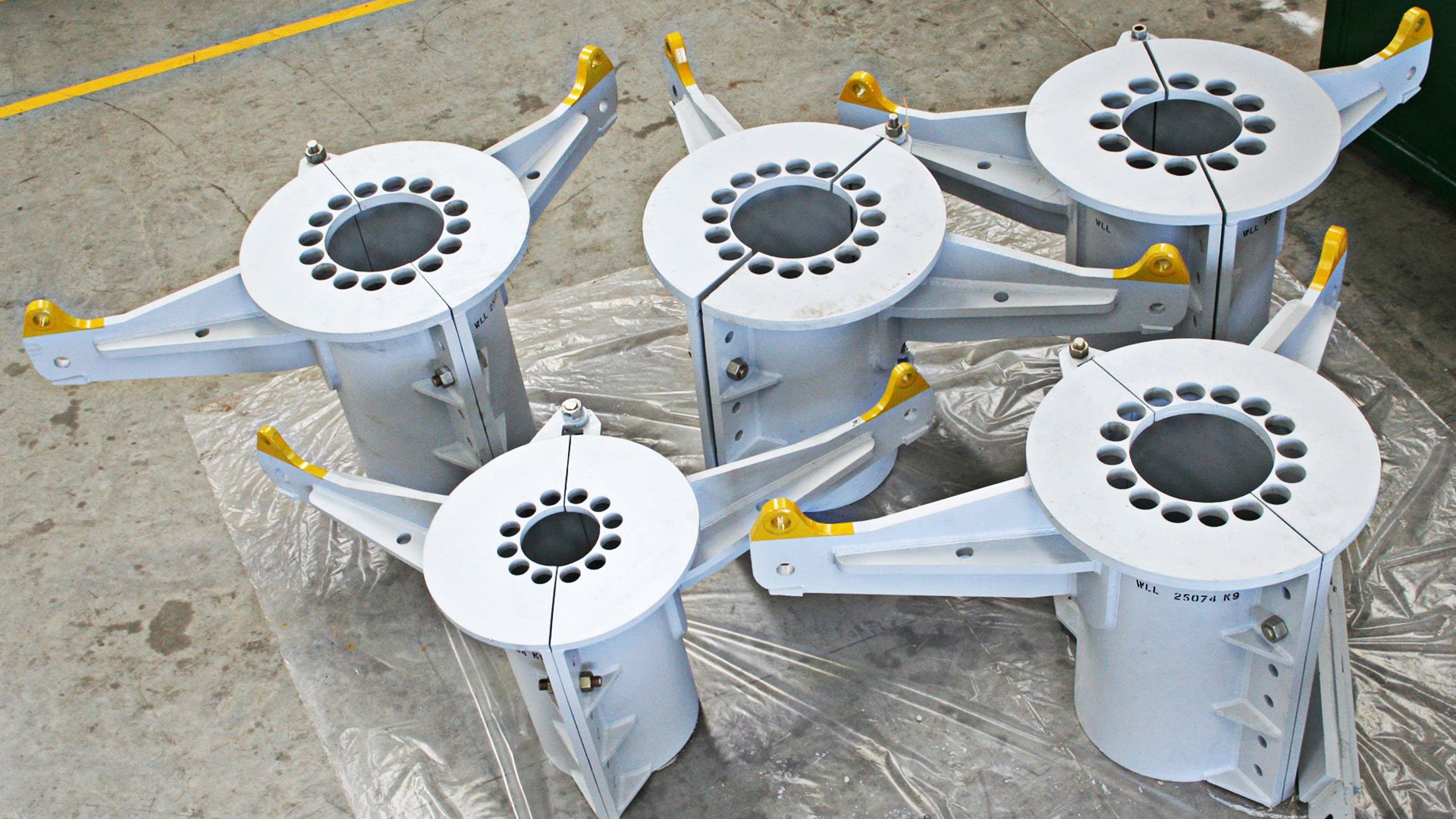
STATS Group engineered and manufactured eight bespoke Riser Release Clamps, sized to match the specific riser diameters on site: two 5-inch, four 8-inch, one 10-inch, and one 12-inch unit.
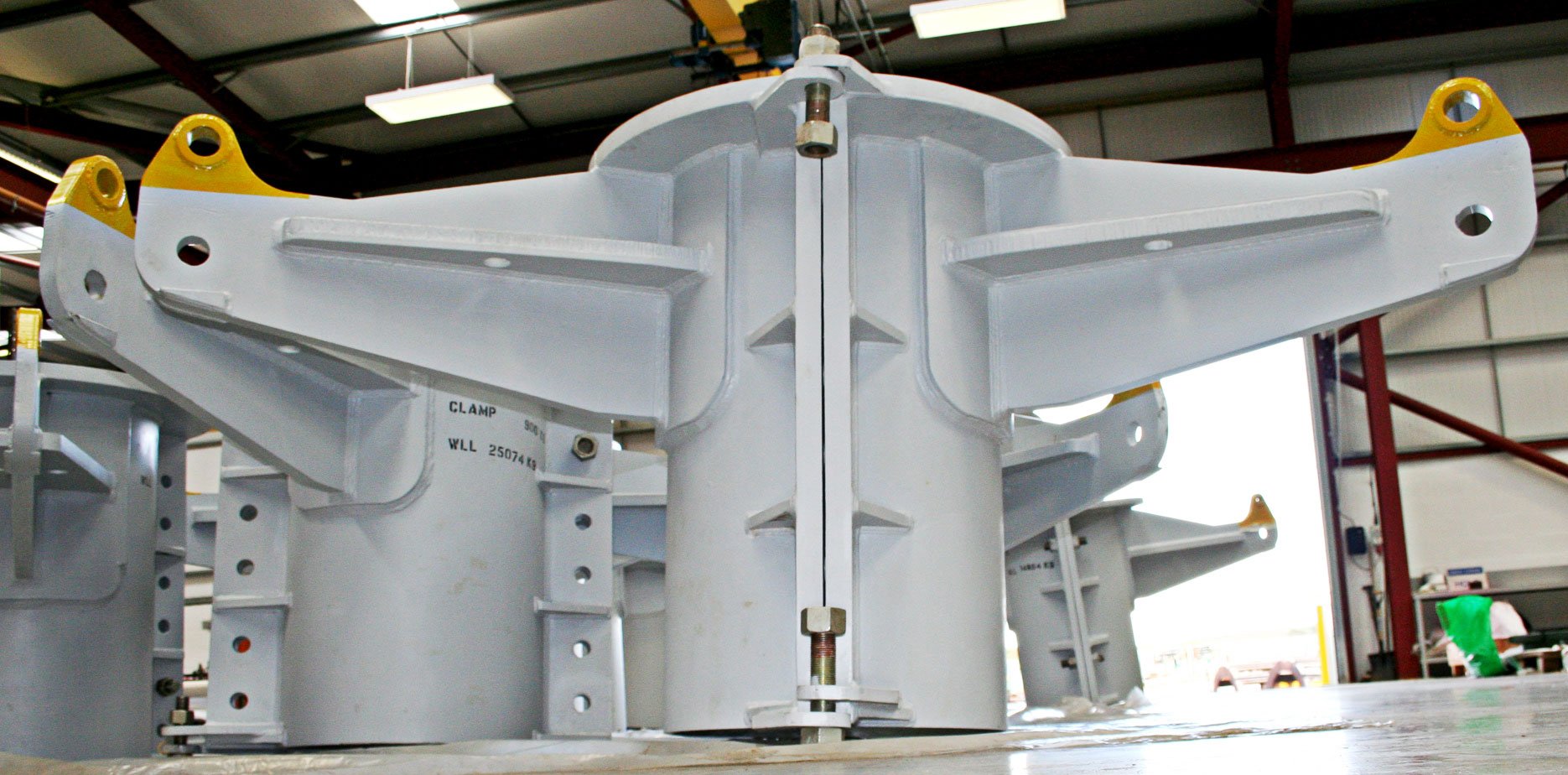
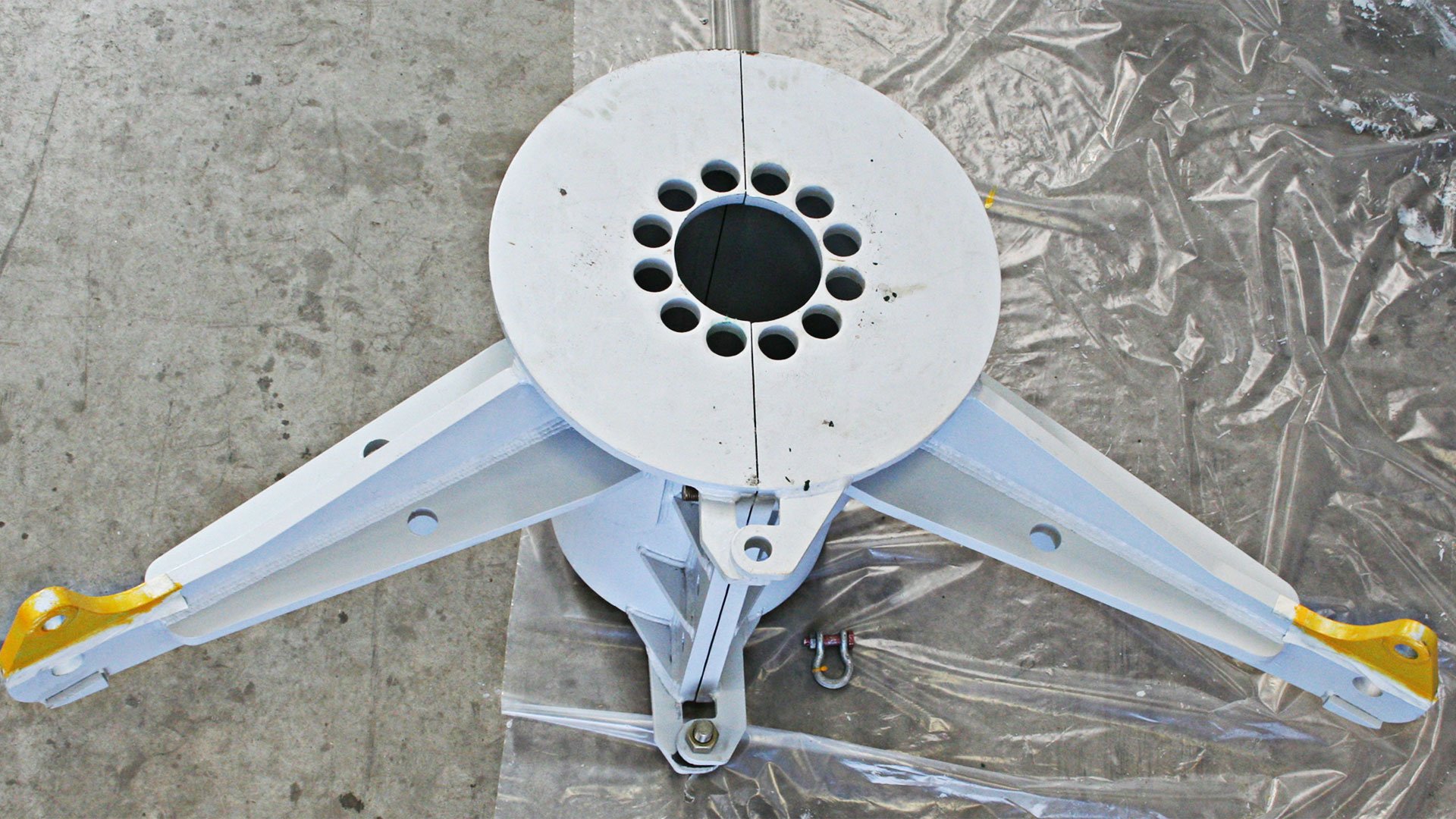
Each clamp featured a hinged design that could be opened and positioned around the riser, with an integrated hold-open device that kept the clamp accessible during deployment—critical for diver operations in challenging conditions.
The engineering centrepiece was a set of precision-machined, adjustable counterbalance arms, that could be adjusted to maintain the required 11° angle relative to each riser, ensuring proper load distribution regardless of diameter. Lifting points were strategically positioned on these counterbalance arms, allowing divers to manoeuvre each clamp around the RRC casing located above the riser head, working within the constrained vertical envelope. Each clamp was designed and tested to withstand the full weight of its respective riser throughout both the release and controlled lowering phases, providing the fail-safe backup, required for successful riser release and decommissioning.